

Treating Gynecomastia – For a Defined, Masculine Chest

Many men know the feeling: You work out, you watch your diet – and yet that uncomfortable volume in the chest area remains. So-called gynecomastia (male breast gland enlargement) affects more men than you might think – and can now be treated permanently and with aesthetic precision.
At BONITAS Clinic, Alejandro Marti, a specialist in male breast correction, is at your side with discreet understanding and surgical expertise. Goal: A masculine chest shape that finally makes you feel comfortable again.
At a glance: Gynecomastia correction removes the breast enlargement in men with PAL liposuction and plasma tightening, without a large incision.
- Duration of surgery: 1–2 hours under general anaesthesia
- Standard method: PAL liposuction + plasma tightening (rarely skin tightening)
- Hospital stay: outpatient or 1 day inpatient
- Convalescence: 1 week, sport after 4–6 weeks
- Final result: visible after 3 months
- Prices: in our price overview
What is Gynecomastia?
Gynecomastia refers to an enlarged male mammary gland. It can occur unilaterally or bilaterally and often persists despite exercise and diet.
It is important to distinguish it from pseudogynecomastia – this is not glandular tissue, but rather fat deposits in the chest area. Both forms can be treated specifically and effectively at BONITAS Clinic.
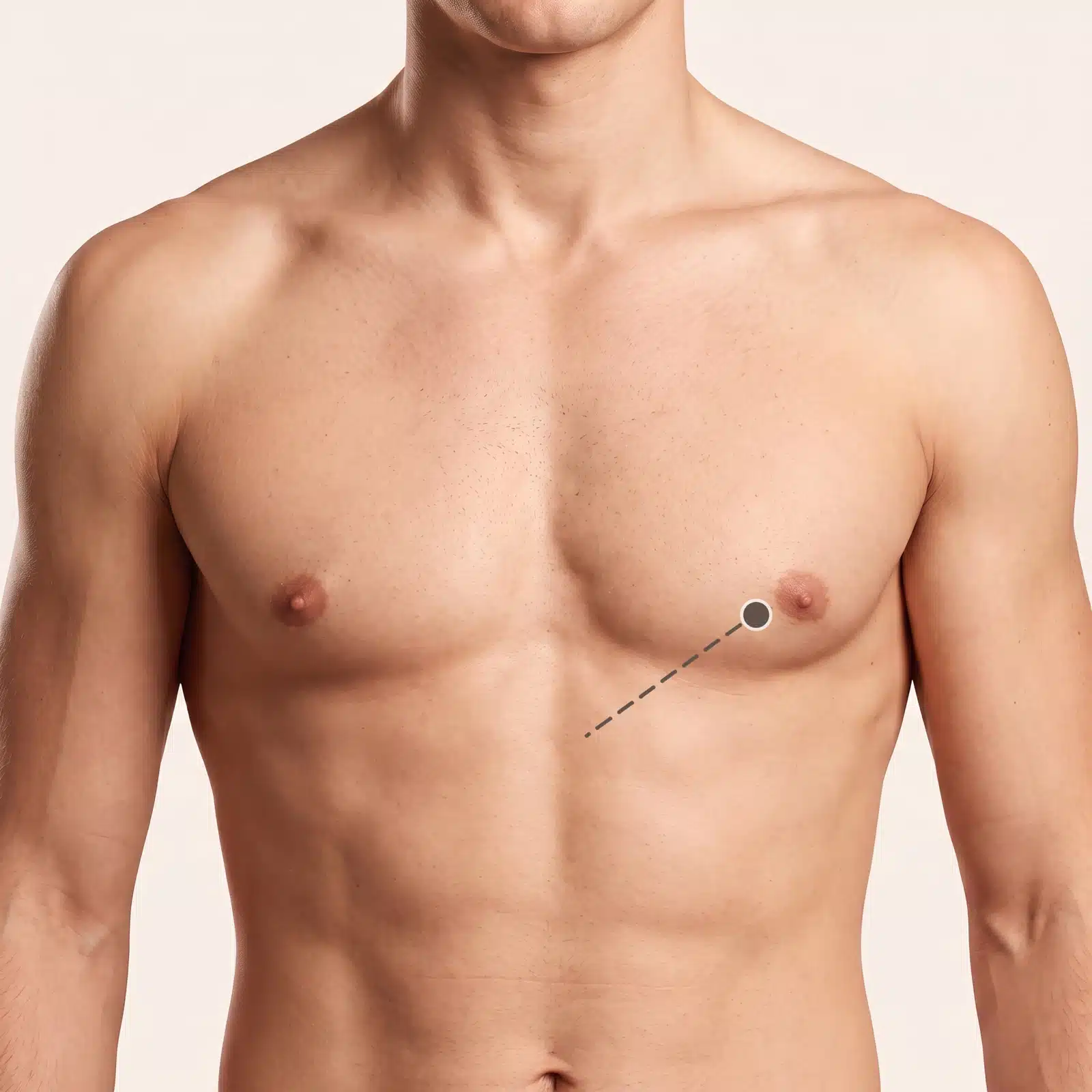
Causes & Forms (True vs. Pseudogynecomastia)
Causes include:
Why Surgery Can Be the Right Step
Enlarged breasts burden many men deeply emotionally: Insecurity during sports, at the beach, or in relationships, avoidance of tight clothing or looking in the mirror.
Gynecomastia surgery is a proven way to permanently correct this condition – for a confident, masculine appearance and noticeable relief in everyday life.
Your Gynecomastia Treatment Process
Before the procedure
On the day of the operation
After the operation
Correction Techniques
The Plastic Surgeon individually selects the incision technique & approach – with maximum consideration for aesthetics & discretion.
What you can expect after the surgery
Advantages of Gynecomastia Surgery
Possible Risks & Side Effects
The following side effects are possible:
What to Do After Surgery – What You Should Keep in Mind
Frequently Asked Questions (FAQ) about Gynecomastia

If you are considering medical aesthetic treatment, schedule your consultation for an honest assessment tailored to your needs.
Scientific References
- Hurwitz DJ, Davila AA. „Contemporary Management of Gynecomastia.“ Clinics in Plastic Surgery. 2022. PubMed PMID 35367036
- Abdali H, Rasti M. „Liposuction versus Periareolar Excision Approach for Gynecomastia Treatment.“ Advanced Biomedical Research. 2023. PubMed PMID 37288017
- Ali SS, Ahmed I. „Gynecomastia Surgery: Liposuction Alone versus Liposuction with Endoscope-Assisted Glandular Excision.“ Indian Journal of Plastic Surgery. 2025. PubMed PMID 40894818
- Kanakis GA et al. „EAA clinical practice guidelines – gynecomastia evaluation and management.“ Andrology. 2019. PubMed PMID 31099174
- Rohrich RJ et al. „Classification and management of gynecomastia: defining the role of ultrasound-assisted liposuction.“ Plastic and Reconstructive Surgery. 2003. PubMed PMID 12560721
- Koch T et al. „Marked Increase in Incident Gynecomastia: A 20-Year National Registry Study.“ Journal of Clinical Endocrinology & Metabolism. 2020. PubMed PMID 32754750
Medically reviewed and written by Alejandro Martí
Specialist in Plastic and Aesthetic Surgery 🇩🇪 🇪🇸 · Admitting surgeon
With more than 1,000 plastic and aesthetic procedures performed. Comes from a family with a long tradition in plastic and aesthetic surgery.
Last reviewed: August 2026