



Why does lipedema develop? – Understanding the causes to better understand your body
Many women experience the onset of lipedema as creeping, silent – yet profound. The silhouette changes, legs feel heavier, pressure increases. But the scale or lifestyle doesn’t explain this. And suddenly, a suspicion arises: lipedema.
At BONITAS we help you recognize the origin of your symptoms. Understanding where lipedema comes from makes it easier to accept the condition – and to act with purpose.
At a glance
The exact causes of lipedema have not been conclusively clarified, and hormonal, genetic and inflammatory factors play a role.
- Hormonal
- puberty, pregnancy, menopause as triggers
- Genetic
- familial clustering in up to 60%
- Inflammation
- chronic low-grade inflammation in the fatty tissue
- Sex
- almost exclusively women affected
- Therapy
- PAL liposuction + compression
- Prices
- in our price overview
What exactly is lipedema?
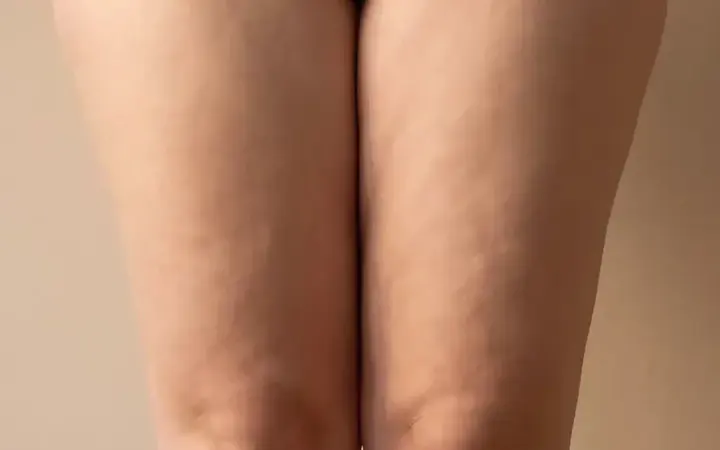
Lipedema is a chronic, progressive disease of the adipose tissue, in which fat cells proliferate uncontrollably and symmetrically on the legs, hips, or arms. Accompanying symptoms include pain, tenderness, and swelling. It is not a classic weight gain – exercise or diet show little effect.
The Most Important Causes & Risk Factors
The exact cause of lipedema is not yet fully understood. However, several key mechanisms that influence its development are medically proven:
- Hormonal Changes
Many patients report the first appearance or a worsening of lipedema during hormonal transition phases – e.g., during:
- Puberty
- Pregnancy
- Menopause
This indicates a strong hormonal involvement, especially due to estrogens.
- Genetic Predisposition
In up to 60% of cases, there are familial clusters. If your mother, grandmother, or sister is affected, your risk also increases.
- Disrupted Fat Distribution & Metabolism
Newer studies suggest that fat cells in lipedema can be enlarged, inflamed, and insulin-resistant – meaning they do not react like “normal” fat cells to diet or exercise.
What Role Do Hormones Play?
Hormonal fluctuations are considered a central trigger for lipedema – especially the female sex hormone estrogen seems to influence the growth and behavior of fat cells. Therefore, lipedema occurs almost exclusively in women – and almost never before puberty or in men.
Is Lipedema Hereditary?
Yes, genetic predisposition is a central factor. Many patients report that their mother or aunt also had similar symptoms – but at the time, these were dismissed as “predisposition” or “heavy legs”. Lipedema is therefore not imagined, but a hereditary disease – and deserves to be taken seriously.
Lifestyle: Not a Trigger, but an Amplifier
Important to know: Lipedema does not develop due to poor diet or lack of exercise. However, an unhealthy lifestyle can exacerbate the symptoms. Excess weight can also put pressure on the lymphatic system and worsen symptoms such as swelling, skin changes, and mobility restrictions.
Therefore, a healthy lifestyle is valuable – but not a cause and not the sole solution.
Psychological Factors Also Play a Role
The physical symptoms are often just one side. Many women also suffer from:
These psychological burdens can further worsen body image. That’s why at BONITAS, we focus on education, empathy, and holistic support.
How BONITAS Provides Holistic Support
We understand that lipedema is not an easy diagnosis. It’s a process – and you need someone to accompany you on this journey.
BONITAS offers you:
Frequently asked questions (FAQ)

If you are considering medical aesthetic treatment, schedule your consultation for an honest assessment tailored to your needs.
Scientific References
5 sources
- Poojari A, Dev K et al. „Lipedema: Insights into Morphology, Pathophysiology, and Challenges.“ Biomedicines. 2022. PubMed PMID 36551837
- Herbst KL. „Subcutaneous Adipose Tissue Diseases: Dercum Disease, Lipedema, Familial Multiple Lipomatosis, and Madelung Disease.“ Endotext. 2019. PubMed PMID 31895524
- Faerber G et al. „S2k guideline lipedema.“ Journal der Deutschen Dermatologischen Gesellschaft. 2024. PubMed PMID 39188170
- Child AH et al. „Lipedema: An Inherited Condition.“ American Journal of Medical Genetics. 2010. PubMed PMID 20358611
- Faerber G, Cornely M et al. „S2k guideline lipedema.“ Journal der Deutschen Dermatologischen Gesellschaft. 2024. PubMed PMID 39188170