



Recognizing Lipedema Symptoms – the first step to a correct diagnosis

You exercise regularly, eat healthily – yet your legs appear shapeless, swell, and feel heavy? Then there might be more to it than “predisposition” or “a few extra pounds”.
Many women suffer for years from the typical symptoms of lipedema without knowing that it is a medical condition – and not an aesthetic problem. At BONITAS, we help you recognize the signs early, assess your symptoms, and initiate the right treatment.
At a glance
The symptoms of lipedema include disproportionate fat increase, pain on pressure and touch, a tendency to bruise and a feeling of heaviness.
- Main symptoms
- symmetrical fat increase in legs/arms
- Pressure pain
- typical, often intensified premenstrually
- Bruises
- spontaneous or after minimal trauma
- Differential diagnosis
- lymphedema, obesity, venous insufficiency
- Diagnostics
- clinical
- Prices
- in our price overview
What is Lipedema?
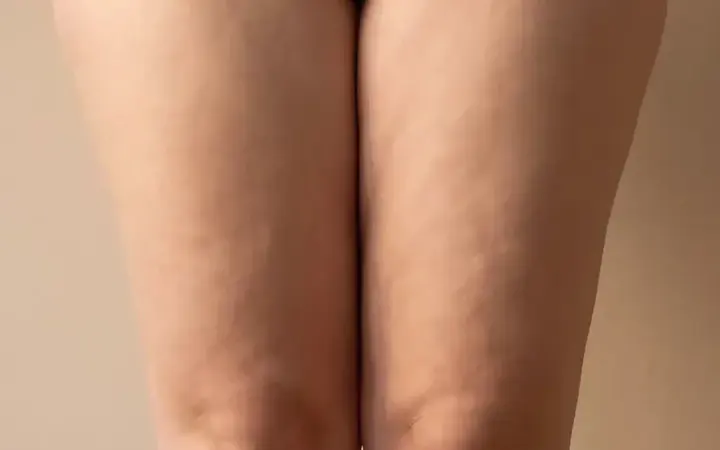
Lipedema is a chronic fat distribution disorder that almost exclusively affects women – mostly hormonally induced (e.g., after puberty, pregnancy, or menopause). The subcutaneous fat tissue increases symmetrically on the legs and/or arms, while the torso and upper body remain slender.
Unlike ordinary weight gain, these fat accumulations cannot be reduced by exercise or diet – they also cause pressure pain, feelings of tension, and psychological distress.
Typical Lipedema Symptoms: Overview
The symptoms are clear – if you recognize them. Look out for the following signs:
Important: In the early stages, skin and tissue still appear smooth – but the discomfort is already noticeable. The earlier it is recognized, the better it can be treated.
Obesity or Lipedema? – Important Differences
Many women are wrongly told they are simply “overweight”. However, lipedema is not synonymous with obesity:
Lipedema
Obesity
Lipedema also differs significantly from lymphedema – due to different swelling characteristics and no unilateral manifestation.
Stages of Lipedema
Lipedema develops gradually – in three clinically distinguishable stages:
Early action can slow progression and prevent long-term consequences.
Why an early diagnosis is so important
The earlier you recognize the symptoms, the more you can do. Because: Lipedema is not curable, but very treatable – especially in the early stages.
Early therapy can:
BONITAS accompanies you discreetly, empathetically, and with the most modern methods.
How BONITAS can help you
At BONITAS, you will receive not only a precise assessment, but also comprehensive care at the highest level.
Frequently asked questions (FAQ)

If you are considering medical aesthetic treatment, schedule your consultation for an honest assessment tailored to your needs.
Scientific References
6 sources
- Faerber G, Cornely M et al. „S2k guideline lipedema.“ Journal der Deutschen Dermatologischen Gesellschaft. 2024. PubMed PMID 39188170
- Poojari A, Dev K et al. „Lipedema: Insights into Morphology, Pathophysiology, and Challenges.“ Biomedicines. 2022. PubMed PMID 36551837
- Herbst KL. „Subcutaneous Adipose Tissue Diseases: Dercum Disease, Lipedema, Familial Multiple Lipomatosis, and Madelung Disease.“ Endotext. 2019. PubMed PMID 31895524
- Bertsch T et al. „Lipoedema: a paradigm shift and consensus.“ Journal of Wound Care. 2020. PubMed PMID 33170068
- Klöppel M et al. „Quality of life following liposuction for lipoedema: a prospective outcome study.“ Journal of Plastic, Reconstructive & Aesthetic Surgery. 2024. PubMed PMID 38402815
- Aday AW, Donahue PM et al. „National survey of patient symptoms and therapies among 707 women with a lipedema phenotype.“ Vascular Medicine. 2024. PubMed PMID 37844030