

Tuberous Breast Treatment – For a breast shape that suits you
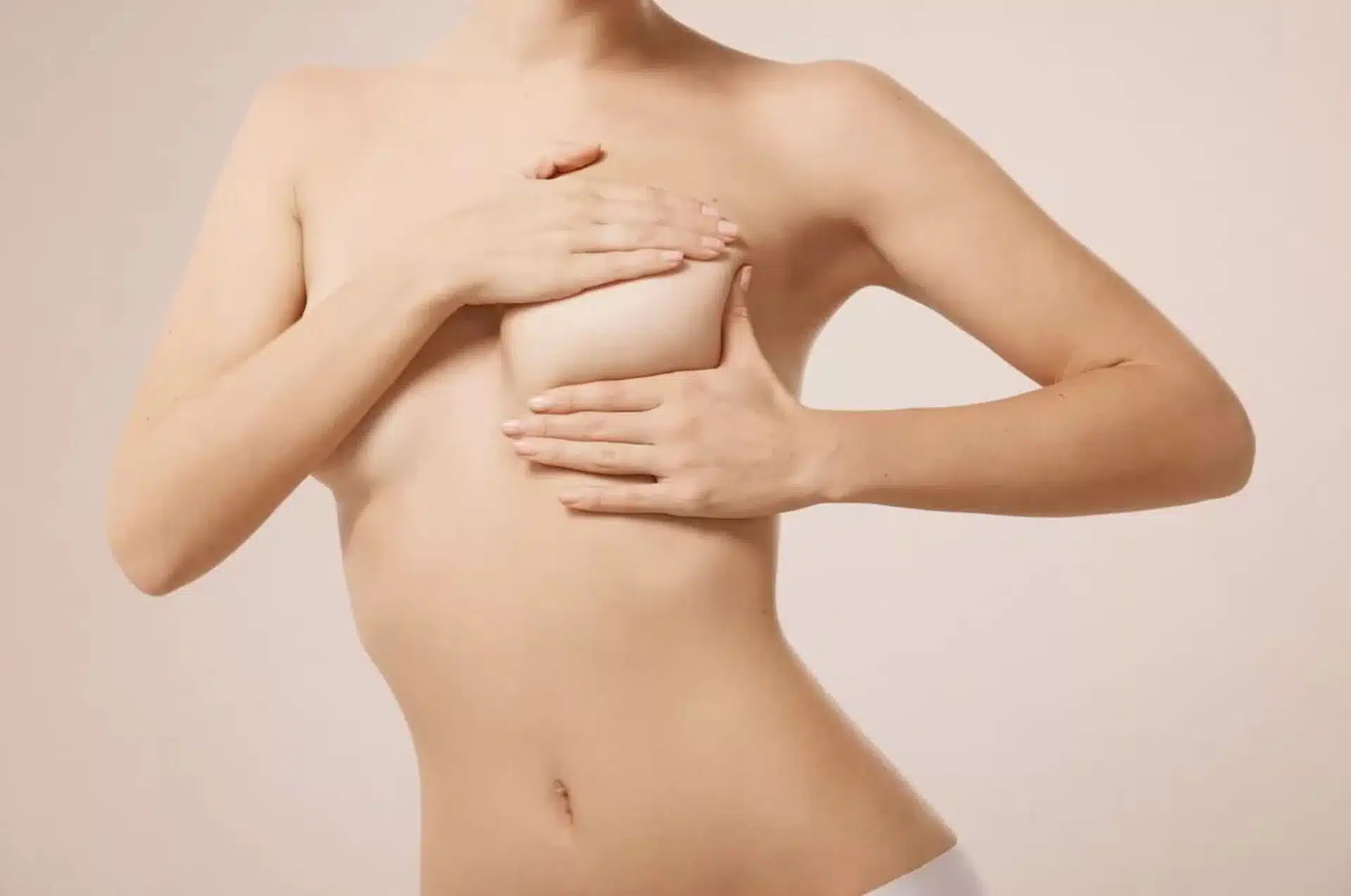
Women with tuberous breast deformity (also called constricted breast) experience not only physical but also emotional burdens: insecurity, frustration, the feeling of being “not normal”. However, this type of deformity is widespread – and medically treatable.
At BONITAS our specialist in Plastic and Aesthetic Surgery, takes your wishes to heart with great care. His goal: to create a breast shape that feels harmonious, feminine, and truly right for you – whether with or without implants.
At a glance: The correction of the tubular breast shapes the narrow, constricted breast into a harmonious, round silhouette.
- Surgery time: 2–3 hours under general anaesthesia
- Method: glandular remodelling + implant or own fat
- Hospital stay: 1 day as an inpatient
- Recovery: 2 weeks, sport after 4–6 weeks
- Final result: visible after 6 months
- Prices: in our price overview
What is a tuberous breast?
Tuberous breast deformity is a congenital breast malformation in which the breast appears tube-shaped, asymmetrical, or constricted. Often, the breast base is very narrow, the lower pole is underdeveloped, and the nipple is enlarged and noticeably protruding.
This condition can occur unilaterally or bilaterally – and is not a cosmetic problem, but an anatomically caused breast malformation that does not “grow out on its own”, but requires targeted surgical correction.
Typical Characteristics of Tuberous Breast
Why is the correction so important?
Beyond the aesthetic aspect, treating tuberous breast often also involves self-esteem, body image, and the desire to finally feel naturally feminine – even in intimate moments or when looking in the mirror.
How the Tuberous Breast Correction Works
Before the procedure
The Procedure
After the Procedure
Which technique will be used for you?
The choice of method depends on the individual manifestation of the tuberous breast. The plastic surgeon plans each procedure in a customized and holistic manner.
Possible Techniques:
Results – what you can expect
Advantages of treatment at BONITAS practice
Risks & Healing Process
Tuberous breast correction is a surgically demanding procedure that belongs in experienced hands. At BONITAS practice, safety & aesthetics are the top priority.
Possible Risks:
Healing time: approx. 4 weeks until the result stabilizes
Aftercare Tips
Frequently asked questions (FAQ)

If you are considering medical aesthetic treatment, schedule your consultation for an honest assessment tailored to your needs.
Scientific References
- Lonie S, Tavakoli K. „An Algorithm for Correction of Mild Tuberous Breast Deformity in Augmentation Mammaplasty.” Aesthetic Surgery Journal. 2023. PubMed PMID 37556836
- Faure A, Mosca MV et al. „Tuberous breast deformity correction: Long-term satisfaction assessment with BREAST-Q questionnaire.” Annales de Chirurgie Plastique et Esthétique. 2021. PubMed PMID 34563409
- Ioppolo L et al. „Tuberous Breasts Associated with Chest Wall Deformity: A Challenging Planning.” Aesthetic Plastic Surgery. 2024. PubMed PMID 38157013
- van Durme J et al. „The Different Surgical Strategies for Treating Tuberous Breast Deformity: A Scoping Review.” JPRAS Open. 2024. PubMed PMID 39555168
- Zholtikov V et al. „Tuberous Breast Deformity Correction: 12-year Experience.” Aesthetic Plastic Surgery. 2019. PubMed PMID 30411146
Medically reviewed and written by Alejandro Martí
Specialist in Plastic and Aesthetic Surgery (DE & ES) · Belegarzt (admitting privileges)
More than 1,000 plastic and aesthetic procedures performed. Comes from a family with a long tradition in Plastic and Aesthetic Surgery.
Last reviewed: May 2026