

Bunny Lines Treatment with Botulinum Toxin (Botox®)
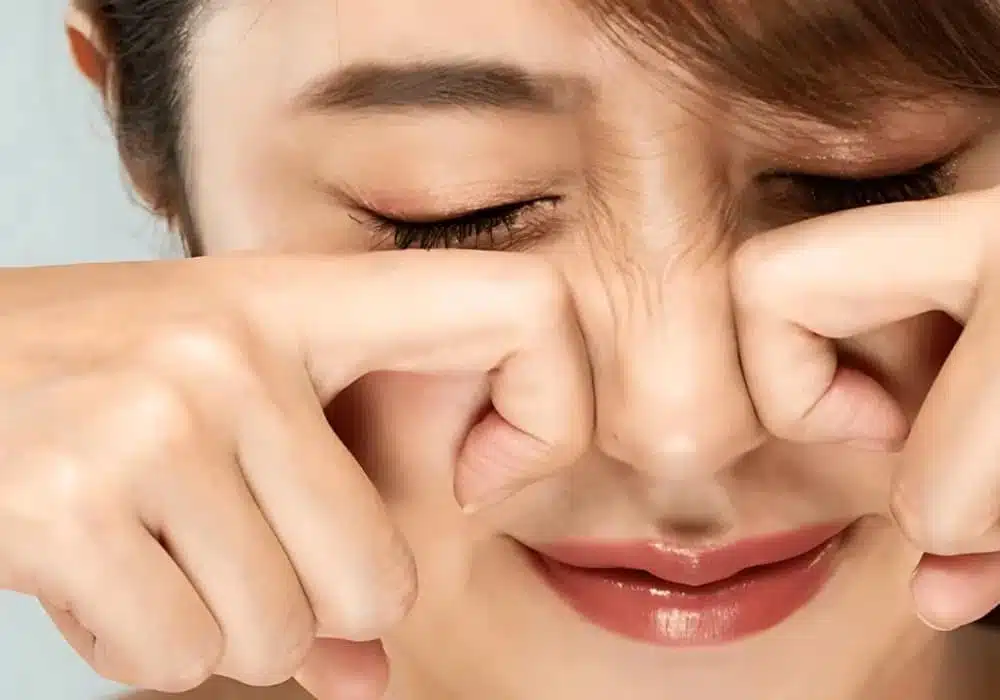
“Bunny Lines” – that sounds cute. But the horizontal lines next to the bridge of the nose, which appear when smiling or talking, often look anything but charming. They can make your face appear restless, aged, or even severe – even if you actually feel fresh and open.
With a targeted Botox® treatment at BONITAS, these nasal wrinkles can be gently smoothed without restricting your facial expressions. For a clear, calm complexion – and a face that is truly yours.
At a glance: The bunny lines (the small laughter lines on the bridge of the nose) are treated with Botox for a smooth and natural appearance.
- Treatment time: 5–10 minutes
- Method: botulinum toxin type A (nasalis muscle)
- Onset of effect: after 3–7 days
- Duration of effect: 3–4 months
- Top-up: every 3–6 months
- Prices: in our price overview
What are Bunny Lines?
Main Causes:
Especially with repeated Botox treatment in the upper third of the face (e.g., forehead, frown lines), Bunny Lines can appear more prominently, as the muscles seek other ways to build tension.
How does the Botox® treatment work?
Bunny Lines are caused by muscle contractions. Botulinum toxin (Botox®) specifically relaxes the muscle responsible for them:
Important: The treatment requires fine anatomical knowledge – therefore, it should only be performed by experienced specialists, as at BONITAS.
Treatment Process at BONITAS
Duration: approx. 10 minutes
Pain: minimal to non-existent
Effect: visible after 3–5 days
Results & Duration
Regular treatments lead to permanently less visible lines, as the muscle is less actively used.
Why BONITAS?
At BONITAS, your natural look is the priority – not a trend.
Frequently asked questions (FAQ)

If you are considering medical aesthetic treatment, schedule your consultation for an honest assessment tailored to your needs.
Scientific References
- Small R. „Botulinum toxin injection for facial wrinkles.” American Family Physician. 2014. PubMed PMID 25077722
- Sundaram H et al. „Global Aesthetics Consensus: Botulinum Toxin Type A–Evidence-Based Review, Emerging Concepts, and Consensus Recommendations for Aesthetic Use, Including Updates on Complications.” Plastic and Reconstructive Surgery. 2016. PubMed PMID 26910696
- Hong SO. „Cosmetic Treatment Using Botulinum Toxin in the Oral and Maxillofacial Area: A Narrative Review of Esthetic Techniques.” Toxins. 2023. PubMed PMID 36828397
- Minokadeh A, Matarasso SL et al. „Neuromodulators in Men.” Dermatologic Surgery. 2024. PubMed PMID 39196837
Medically reviewed and written by Alejandro Martí
Specialist in Plastic and Aesthetic Surgery 🇩🇪 🇪🇸 · Belegarzt (admitting privileges)
With more than 1,000 plastic and aesthetic treatments performed, both surgical and minimally invasive. Comes from a family with a long tradition in Plastic and Aesthetic Surgery.
Last reviewed: May 2026