



Lipedema in the Legs – When Every Step Gets Heavier

It often starts subtly – with a feeling of tension, heavy legs, or a sudden dissatisfaction with one’s own silhouette. Despite exercise, healthy eating, and compression, nothing seems to change. And eventually it becomes clear: It’s not you. It’s lipedema.
At BONITAS, a Specialist accompanies you on your way out of uncertainty – with a clear goal: Less pain, more mobility, and finally lightness in your legs again.
At a glance
the lipedema liposuction on the legs reduces the column-shaped legs, pressure pain and restricted movement.
- Surgery duration
- 3 to 4 hours per session under general anesthesia
- Method
- PAL liposuction + tumescent technique (lymph-sparing)
- Hospital stay
- 1 day inpatient
- Recovery
- 4 weeks of compression day and night, then 2 weeks during the day, sports after 4 to 6 weeks
- Final result
- visible after 3 to 6 months
- Prices
- in our price overview
What is Lipedema in the Legs?
Lipedema is a chronic disease of adipose tissue, in which fat cells symmetrically – almost always first in the legs – multiply uncontrollably. This leads to:
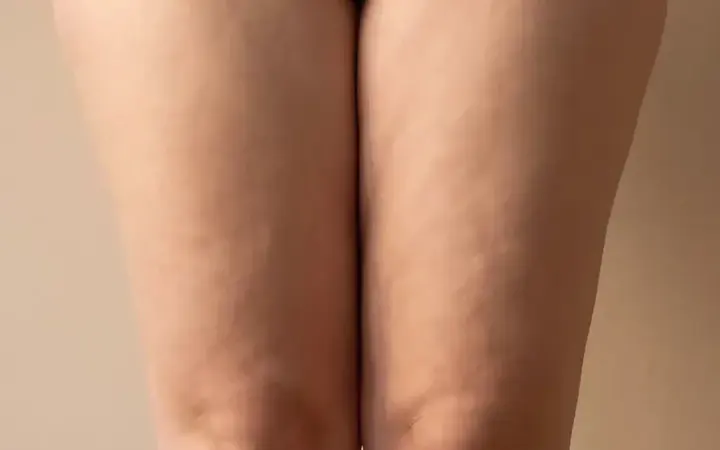
Mainly affected are the thighs, knees, lower legs, and often the calves – the feet usually remain slender, which explains the typical “column-like appearance”.
Recognizing Typical Symptoms
| Symptom | Specificity of Lipedema in the Legs |
|---|---|
| Feeling of Heaviness | Often independent of movement, present even in the morning |
| Pain on Pressure | Perceptible even with light touch |
| Symmetrical Increase in Circumference | Both legs equally affected |
| Tendency to Bruise | Even with the slightest bumps |
| No Effect from Diet or Exercise | Body weight can be stable – legs still “thick” |
| “Pants fit at the waist, never on the legs” | Typical daily problem due to disproportionate weight distribution |
Why Exercise & Diet Don't Help with Lipedema
Unlike obesity, lipedema involves pathologically altered adipose tissue that does not respond to calorie deficit, exercise, or diet. Many patients therefore experience years of frustration – and often eating disorders or feelings of guilt.
BONITAS provides clarity: You haven’t done anything wrong. Your body needs help, not criticism.
How Lipedema in the Legs Progresses
Lipedema progresses in three stages, with the legs usually being affected first:
The earlier it is recognized and treated, the better symptoms can be alleviated and progression slowed down.
Treatment Options – Conservative & Surgical
BONITAS offers you both – holistically, individually, and without pressure to have surgery:
Liposuction in the Legs – Targeted, Gentle, Effective
For advanced lipedema or persistent symptoms, liposuction in the legs is the only way to permanently remove the pathological adipose tissue. BONITAS uses state-of-the-art technology for this:
Goal: Less pain. More mobility. And a body you feel at home in again.
Why BONITAS?
Frequently asked questions (FAQ)

If you are considering medical aesthetic treatment, schedule your consultation for an honest assessment tailored to your needs.
Scientific References
5 sources
- Faerber G, Cornely M et al. „S2k guideline lipedema.” Journal der Deutschen Dermatologischen Gesellschaft. 2024. PubMed PMID 39188170
- Peled AW, Slavin SA et al. „Long-term Outcome After Surgical Treatment of Lipedema.” Annals of Plastic Surgery. 2012. PubMed PMID 21629090
- Amato ACM, Benitti DA. „Lipedema Can Be Treated Non-Surgically: A Report of 5 Cases.” The American Journal of Case Reports. 2021. PubMed PMID 34871293
- Faerber G et al. „S2k guideline lipedema.” Journal der Deutschen Dermatologischen Gesellschaft. 2024. PubMed PMID 39188170
- Klöppel M et al. „Quality of life following liposuction for lipoedema: a prospective outcome study.” Journal of Plastic, Reconstructive & Aesthetic Surgery. 2024. PubMed PMID 38402815