
Breast Implant Over or Under the Muscle?
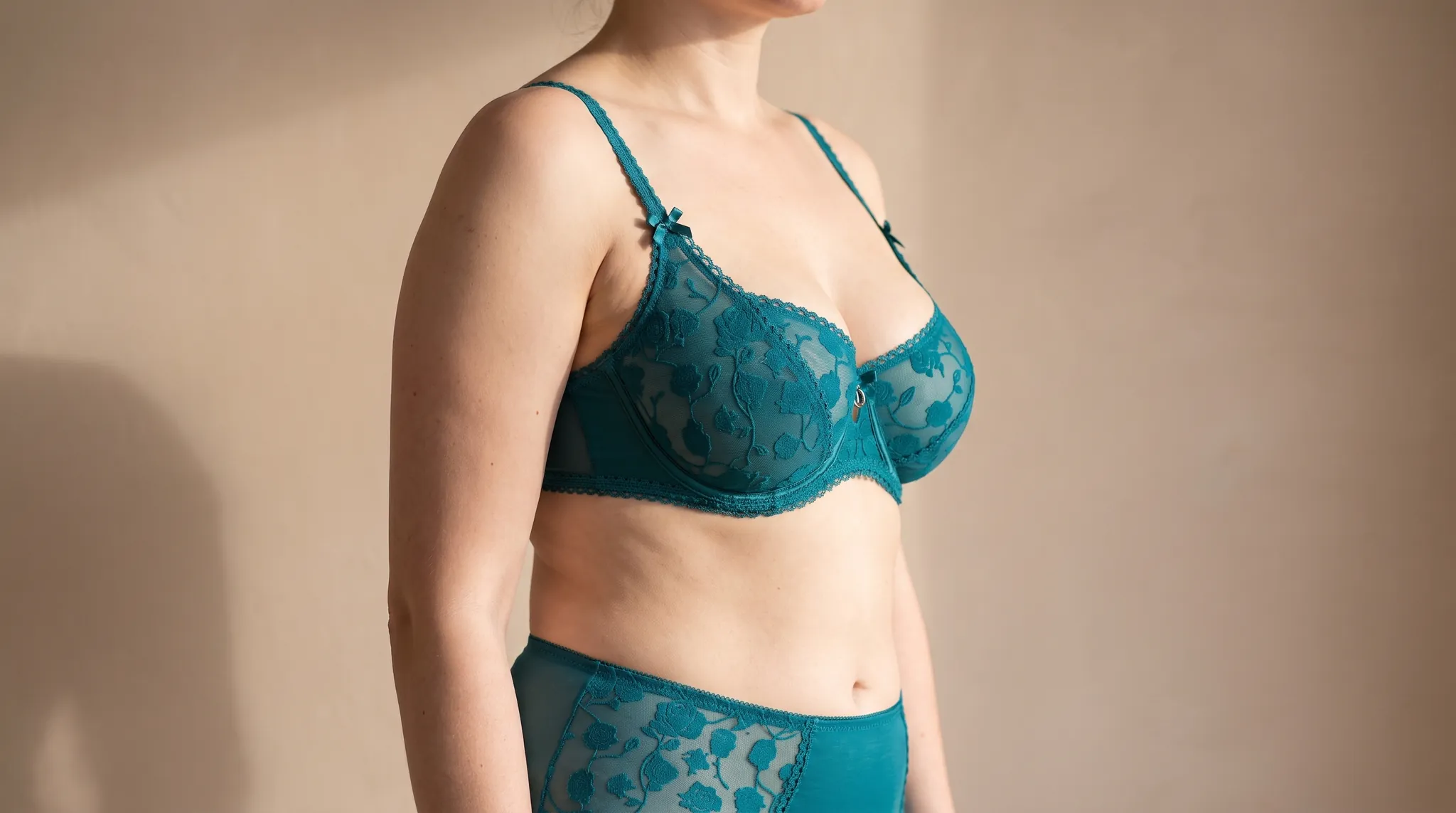
You are considering a breast augmentation with implants and keep coming across the same question: should the implant go over or under the muscle? At first this decision sounds purely technical, yet it has a noticeable influence on shape, naturalness and the long-term result. In this article we explain the different implant positions in clear terms and show you why, at BONITAS, there is no one-size-fits-all solution but rather a decision tailored to your individual anatomy.
Implant position: over, under or partially under the muscle
In a breast augmentation with implants, the implant is placed into what is known as a pocket. Where exactly this pocket lies is described by the implant position. In plastic surgery, three main positions are distinguished:
- Subglandular – the implant lies directly beneath the glandular tissue, that is, over the large chest muscle (pectoralis major muscle).
- Submuscular – the implant lies completely or largely under the chest muscle.
- Dual plane – a combination technique in which the upper part of the implant is covered by the muscle while the lower part lies directly beneath the glandular tissue.
Each of these positions has its own rationale. Which one is suitable for you depends above all on how much of your own breast tissue is present and on the quality of the soft-tissue coverage – that is, the skin, fatty tissue and gland over the implant. This is precisely where individual planning begins.
Subglandular (over the muscle): possible advantages and disadvantages
In the subglandular position, the implant is placed above the chest muscle. This technique is appropriate in certain situations, but it also brings considerations that play a role in the consultation.
Possible advantages
- The procedure does not involve the muscle, which can affect the course of healing.
- With a slightly sagging breast, this position may help to distribute the volume more favourably.
- There is no movement of the implant when the chest muscle is contracted (see animation deformity below).
Possible disadvantages
- With thin soft-tissue coverage, the upper edge of the implant may be more visible or palpable.
- The scientific literature discusses that the rate of capsular contracture may differ depending on the position (Liu et al., 2015).
This position tends to be considered when there is sufficient breast tissue of your own to cover the implant well. In a very slim starting situation, it is viewed more critically.
Submuscular & dual plane (under the muscle): effect on shape and naturalness
When the implant lies under the muscle, the chest muscle provides an additional layer of tissue over the upper portion of the implant. Particularly in the upper pole of the breast, this can contribute to a softer, more natural transition – one reason why these positions are often preferred when soft-tissue coverage is thin.
The dual-plane technique has established itself as a versatile solution in modern breast surgery. It combines the advantages of both approaches: the muscle covers the upper area and creates a gentle transition, while the lower portion of the implant follows the glandular tissue and can adapt to the natural shape of the breast. Studies that have evaluated results after dual-plane augmentation three-dimensionally focus precisely on this contouring (Li et al., 2023).
Analyses of practice patterns in primary breast augmentation show that submuscular and dual-plane positioning have held a firm place over the years (Stein et al., 2023). Which variant is suitable in an individual case nevertheless remains a personal decision – blanket statements do not do justice to the diversity of starting findings.
Influence of the position on palpability, décolleté and animation deformity
The choice of implant position affects several aspects that can be noticeable in everyday life:
- Palpability: the thinner the soft-tissue coverage, the more likely the implant edge is to be palpable. A position under the muscle provides additional coverage in the upper area.
- Décolleté and upper pole: the transition in the upper breast area varies depending on the position. Here it is a question of the trade-off between fullness and a soft, natural contour.
- Animation deformity: when the implant lies under the muscle, it may visibly move or briefly deform when the chest muscle is contracted – for example during exercise. This phenomenon has been quantitatively investigated in studies on the dual-plane technique (Cheffe et al., 2018). With a subglandular position it does not occur, since the muscle does not cover the implant.
So there is no position that is superior in every respect. Rather, it is a matter of weighing up characteristics in a way that suits your circumstances and wishes. This weighing-up is a central part of any reputable consultation on breast augmentation.
The role of skin quality and existing breast tissue
Perhaps the most important factor in the decision is your individual starting situation. Two people with the same desired volume may receive very different recommendations – and that is a good thing.
The following points feed into the consideration:
- Thickness of the soft-tissue coverage: how much skin, fat and glandular tissue lies over the implant? Thin coverage tends to favour a position under the muscle.
- Amount of your own tissue: if sufficient breast tissue is present, a subglandular position may be considered.
- Skin quality and elasticity: the condition of the skin influences how the tissue supports the implant and how the shape may behave over time.
- Breast shape and symmetry: a breast that is already slightly sagging may call for different considerations than a firm starting shape.
Review articles on breast augmentation emphasise how closely the choice of technique and individual anatomy are linked (Hidalgo et al., 2014). A recent meta-analysis on the selection of the implant pocket also underlines that positioning should be considered in relation to the complication profile (Alderhali et al., 2026). This is precisely why, at BONITAS, the focus is not on a standard technique but on your personal circumstances.
An individual decision in your consultation at BONITAS
In our practice at Kornmarkt 4, we take the time to assess your anatomy in detail. Alejandro Marti, plastic surgeon (Facharzt für Plastische und Ästhetische Chirurgie), examines the soft-tissue coverage, assesses the existing breast tissue and discusses with you which implant position might suit your body and your expectations.
During the consultation we make the decision-making logic transparent: you will learn why a particular position appears suitable for your starting situation and what considerations lie behind it. The goal is a result that feels natural and suits you – not an off-the-shelf solution.
If you are unsure which implant position is right for you, that is completely normal. These are exactly the questions we clarify together, calmly and without pressure. Feel free to arrange an appointment for a personal consultation – we will take the time your decision deserves.
Frequently asked questions
Is an implant under the muscle always more natural?
Not necessarily. A position under the muscle can provide a softer transition in the upper area when soft-tissue coverage is thin. With sufficient breast tissue of your own, however, a subglandular position can also allow for a natural result. The decisive factor is your individual anatomy.
What is an animation deformity?
This refers to a visible movement or deformation of the implant that can occur when the implant lies under the muscle and you contract the chest muscle. With a subglandular position this does not occur. How pronounced the phenomenon is varies from person to person.
Who decides which implant position is right for me?
We make the decision together during the consultation. After a detailed examination of your anatomy, Alejandro Marti explains the options in clear terms so that you can make an informed decision.
A real fitting instead of a 3D simulation: my personal approach
Many practices advertise digital 3D simulations on a screen. I deliberately take a different path. With me, you try out different sizes directly using real trial implants (sizers) – you see and feel the volume and weight immediately on your own body. This tactile sense of your body gives you a more honest impression of the result than any image on a monitor.
On this basis we then choose together the solution that suits you, one that fits optimally with your individual breast footprint, your breast base and your natural breast shape. In this way it is not software that makes the decision, but you – together with me.
Literature & Scientific Sources
- Alderhali R et al. „Implant Pocket Plane Selection in Primary Breast Augmentation: A Meta-Analysis and Systematic Review of Complication Profiles.“ Aesthetic Plastic Surgery. 2026. PubMed PMID 41748776
- Liu X et al. „Comparison of the postoperative incidence rate of capsular contracture among different breast implants: a cumulative meta-analysis.“ PloS One. 2015. PubMed PMID 25680100
- Stein MJ et al. „Practice Patterns in Primary Breast Augmentation: A 16-Year Review of Continuous Certification Tracer Data from the American Board of Plastic Surgery.“ Plastic and Reconstructive Surgery. 2023. PubMed PMID 37014959
- Li XR et al. „Three-dimensional Evaluation of Results After Dual-Plane Breast Augmentation with and Without Internal Suture Mastopexy.“ Aesthetic Plastic Surgery. 2023. PubMed PMID 36454327
- Cheffe MR et al. „Quantifying Dynamic Deformity After Dual Plane Breast Augmentation.“ Aesthetic Plastic Surgery. 2018. PubMed PMID 29302731
- Hidalgo DA et al. „Breast augmentation.“ Plastic and Reconstructive Surgery. 2014. PubMed PMID 24675209
Medically reviewed and written by Alejandro Marti – plastic surgeon, Facharzt für Plastische und Ästhetische Chirurgie 🇩🇪 🇪🇸. Last reviewed: May 2026.