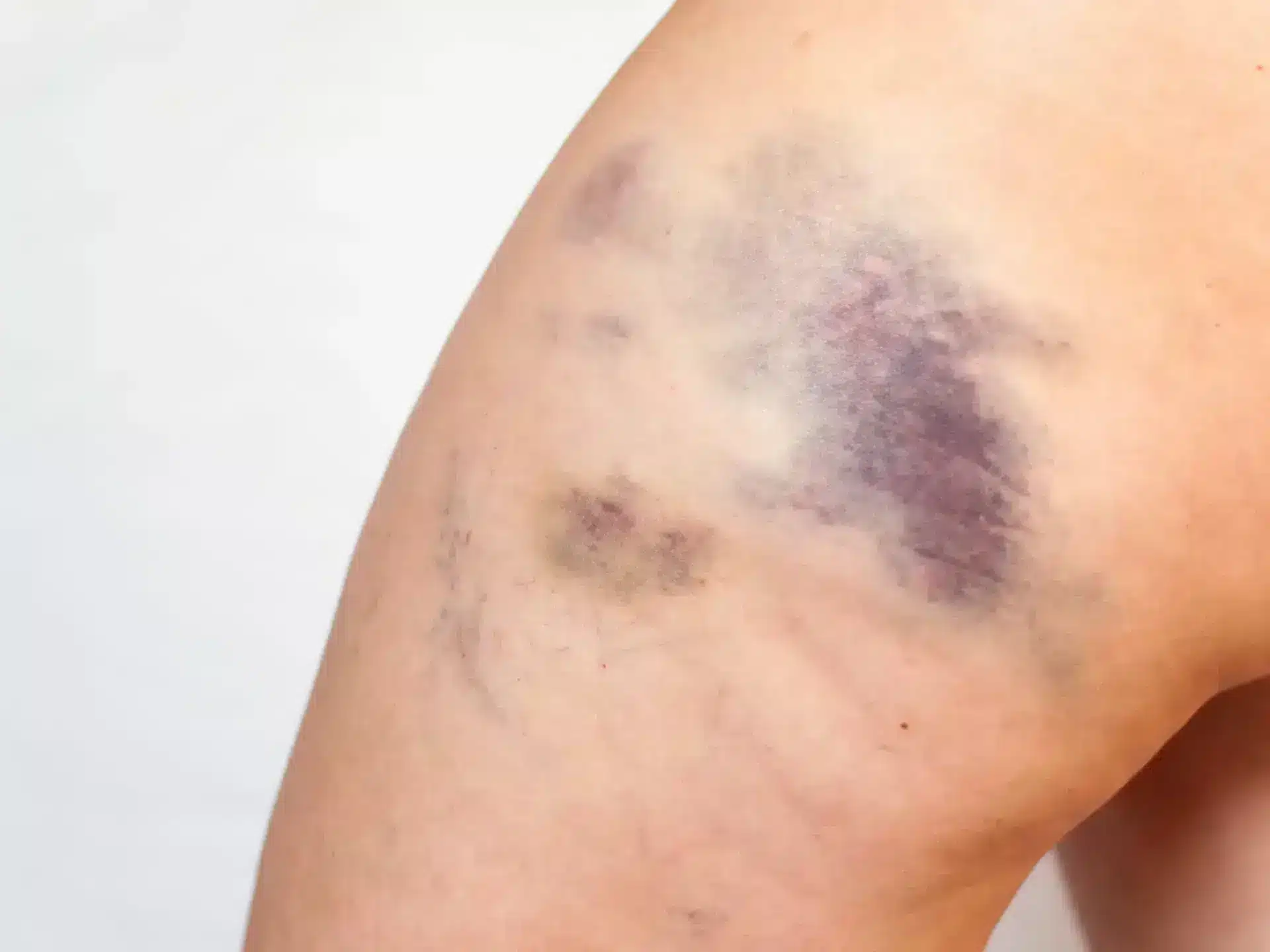
At a glance: A bruise (hematoma) forms when small blood vessels under the skin are damaged and blood leaks into the surrounding tissue. When bruises appear without any recognisable cause, they are usually harmless and can be explained by thin skin or by medication.
- Medication as a trigger: blood thinners (aspirin, Marcumar, NOACs), cortisone preparations as well as ibuprofen and other NSAIDs considerably increase the tendency
- Vitamin deficiency: a vitamin C deficiency can make the capillaries more fragile, and with a vitamin K deficiency the blood clots more slowly
- A possible sign of lipedema: increased bruising on the legs and thighs together with tenderness to pressure and a disproportionate increase in volume
- After surgery: bruising is part of wound healing and usually subsides over two to three weeks
- When to see a doctor: with very frequent, unusually large or long-lasting bruises your family doctor can order a blood count and rule out clotting disorders
Bruises With No Apparent Cause — Possible Reasons and When You Should Take Action
Do you keep noticing bruises with no apparent cause on your legs, arms or elsewhere on your body — without being able to recall ever bumping into anything? You are not alone. Many women are familiar with this phenomenon and wonder whether something more serious lies behind it. In most cases, the causes are harmless. Occasionally, however, unexplained bruising can point to an underlying condition that should be evaluated — including the frequently overlooked lipoedema.
Why Do Bruises Form?
A bruise — known medically as a haematoma — forms when small blood vessels (capillaries) beneath the skin are damaged and blood leaks into the surrounding tissue. Normally this happens through a knock or pressure. When bruises appear seemingly for no reason, however, a number of different factors may play a role.
The Most Common Causes of Bruising With No Obvious Reason
1. Thin or Fragile Skin
As we age, the skin becomes thinner and loses some of its protective layer of subcutaneous fat. In some women, the skin may also be more sensitive for genetic reasons. Even mild pressure — for example from carrying a bag or lying on one side — can then be enough to produce visible bruising.
2. Medications and Dietary Supplements
Certain medications considerably increase the tendency to bruise:
- Blood thinners (aspirin, Marcumar, DOACs)
- Corticosteroid preparations — with prolonged use the skin becomes thinner
- Ibuprofen and other NSAIDs — these inhibit blood clotting
- Certain dietary supplements such as omega-3 fatty acids, ginkgo or garlic extract in high doses
If you take medication regularly and notice an increase in bruising, talk to your doctor about it. Never stop taking medication on your own initiative.
3. Vitamin Deficiency
A deficiency in certain vitamins can affect the stability of the blood vessels and the clotting process:
- Vitamin C: Important for collagen formation and vascular stability. A deficiency can make the capillaries more fragile.
- Vitamin K: Essential for blood clotting. When it is lacking, the blood clots more slowly.
- Vitamin D: Low levels have been associated with an increased tendency towards inflammation.
4. Hormonal Changes
Oestrogen influences the elasticity of the blood vessels. During certain phases — such as the menstrual cycle, pregnancy or the menopause — women may be more prone to bruising.
5. Clotting Disorders
Less common, but medically relevant: disorders of blood clotting such as von Willebrand syndrome or thrombocytopenia (a reduced platelet count) can lead to increased bruising. These should be evaluated by a doctor.
Bruises With No Apparent Cause on the Legs — Could Lipoedema Be Behind It?
A frequently overlooked cause of bruises with no apparent cause, particularly on the legs and thighs, is lipoedema. This chronic disorder of fat distribution affects almost exclusively women and often goes unrecognised for years.
What Is Lipoedema?
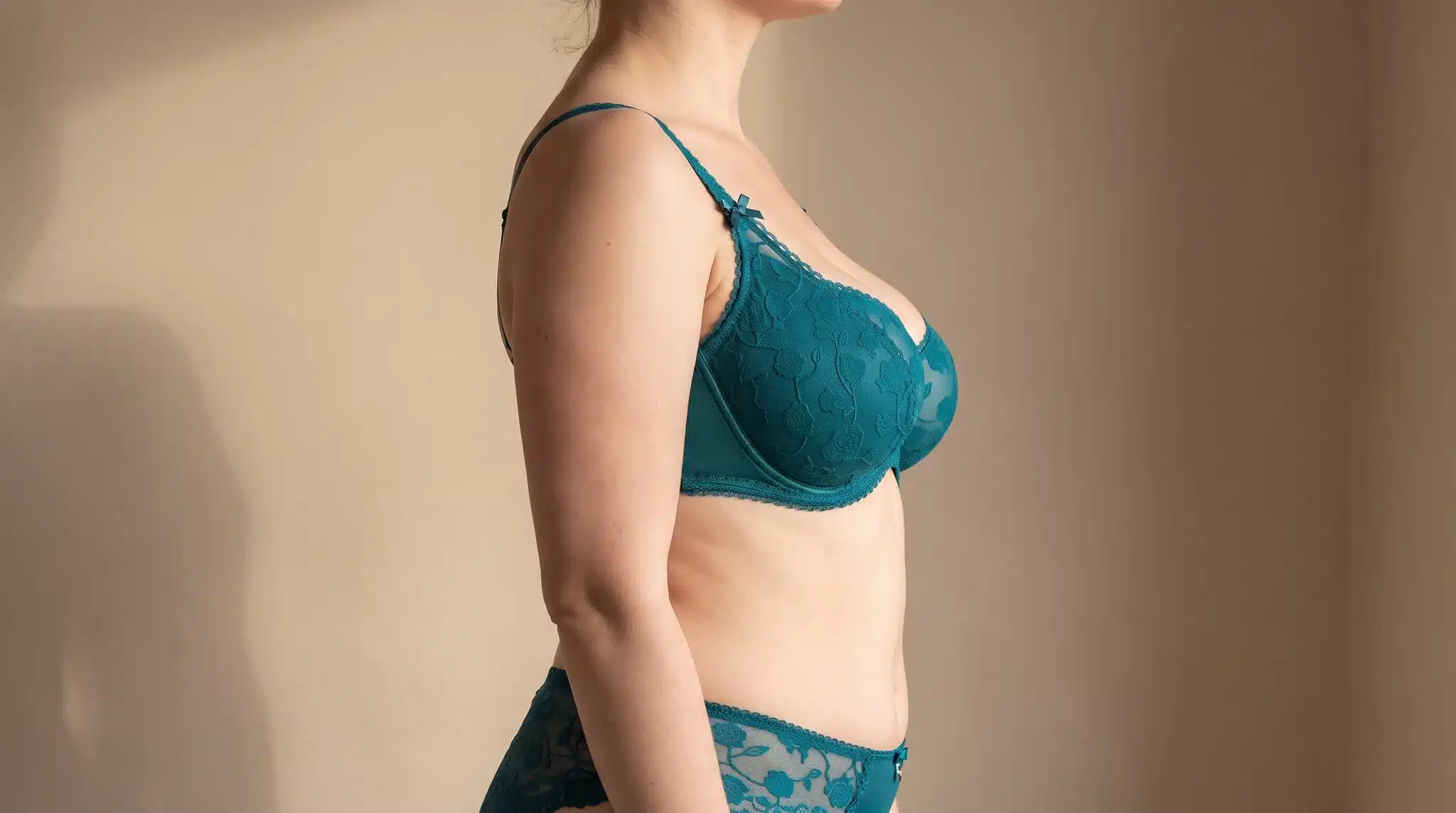
In lipoedema, the subcutaneous fatty tissue on the legs and/or arms increases in an abnormal and symmetrical way — independently of diet and exercise. The affected tissue is especially sensitive to pressure, tends to retain fluid, and its capillaries are more fragile than usual.
Typical Signs of Lipoedema
- Bruises on the thighs and lower legs, seemingly without cause
- Marked tenderness of the legs to pressure
- Symmetrical increase in volume in the legs, while the torso remains slim
- A feeling of heaviness and tightness in the legs, particularly in the evening
- Diets and exercise have little effect on the affected areas
- A frequent family history
If several of these symptoms sound familiar, you should raise the matter with your doctor. The diagnosis of lipoedema is clinical — meaning that an experienced doctor can make it through a physical examination and a detailed discussion.
Why Does Lipoedema So Often Go Unrecognised?
Many women are fobbed off for years with advice such as „exercise more“ or „eat less“. Because lipoedema does not respond to diet and exercise, this leads to frustration and feelings of guilt. In reality it is a medical condition that has nothing to do with lifestyle.
When Should You See a Doctor?
Make an appointment with your GP if:
- Bruises appear very frequently and without any recognisable cause
- The bruises are unusually large or persist for a long time
- Additional symptoms develop (fatigue, bleeding gums, heavy legs)
- You suspect you may have lipoedema
- Bruising only began after you started a new medication
Lipoedema Consultation at BONITAS
If the suspicion of lipoedema is confirmed, a specialised consultation is advisable. Alejandro Martí, specialist in plastic and aesthetic surgery, offers a dedicated lipoedema consultation at the BONITAS practice. In a detailed, personal conversation, your symptoms, your medical history and the individual treatment options are discussed — ranging from conservative therapy through to specialised liposuction for lipoedema.
If you are unsure whether your symptoms point to lipoedema, you are welcome to get in touch with us. We take the time to answer your questions.
Frequently Asked Questions About Bruises With No Apparent Cause
Are bruises with no apparent cause dangerous?
In most cases they are harmless and can be explained by thin skin, minor knocks or medication. However, if they appear very frequently, over a large area, or without any recognisable cause, a medical evaluation should be carried out to rule out clotting disorders or other causes.
Can bruises on the legs be a sign of lipoedema?
Yes. An increased tendency to bruise, particularly on the legs and thighs, is a typical symptom of lipoedema. If tenderness to pressure and a disproportionate increase in leg volume are present at the same time, lipoedema should be considered.
Which doctor is the right person to consult about bruises with no apparent cause?
Your GP is the first point of contact. They can arrange a blood count and rule out clotting disorders. If lipoedema is suspected, a referral to a specialist in plastic surgery or to a lymphologist is advisable.
Can I do anything myself to reduce my tendency to bruise?
Make sure you get an adequate supply of vitamin C and vitamin K through a balanced diet. Protect sensitive areas of skin from pressure and knocks. Check with your doctor whether any medication you are taking could be affecting how often bruises occur.
Medically reviewed and written by:
Alejandro Martí – Specialist in Plastic and Aesthetic Surgery 🇩🇪 🇪🇸
Last reviewed: April 2026
References & Scientific Sources
- Modi AV. „Spontaneous Bruising in a Family Practice Population: How common and how benign is it?.“ Canadian Family Physician Medecin de Famille Canadien. 1992. PubMed PMID 21221312
- Sham RL, Francis CW. „Evaluation of mild bleeding disorders and easy bruising.“ Blood Reviews. 1994. PubMed PMID 7950480
- Kumar P et al. „Role of Autoerythrocyte Sensitization Test in the Diagnosis of Recurrent Spontaneous Bruising.“ Indian Dermatology Online Journal. 2023. PubMed PMID 37266085
- Kouides PA. „Evaluation of abnormal bleeding in women.“ Current Hematology Reports. 2002. PubMed PMID 12901120
- O’Brien SH. „An update on pediatric bleeding disorders: bleeding scores, benign joint hypermobility, and platelet function testing in the evaluation of the child with bleeding symptoms.“ American Journal of Hematology. 2012. PubMed PMID 22460356