At a glance: Compression leggings for lipedema are part of the foundation of conservative treatment: they ease symptoms, support lymphatic drainage and can slow the progression.
- Knitting technique: flat-knitted and made to measure, the medical standard for lipedema
- Compression class: usually class 2 with 23–32 mmHg, often prescribed in stage I–II
- Circular-knitted garments: in most cases not suitable for lipedema
- Wearing time: wear continuously during the day, take off at night
- Cost coverage: with a confirmed lipedema diagnosis, the statutory health insurers usually cover the flat-knitted garments, including two sets per year
- Limits: eases symptoms and can slow the progression, but does not cure the underlying lipedema
\n
Compression leggings for lipedema are a cornerstone of conservative treatment. They ease symptoms, can slow progression and improve quality of life — provided they fit correctly and meet the requirements of the condition. As a specialist in Plastic and Aesthetic Surgery (Facharzt) focusing on lipedema, I advise patients at BONITAS on both conservative care and surgical treatment options. This article explains what matters when choosing the right compression.
\n\n
Why compression is so important in lipedema
\n\n
Lipedema is a chronic disorder of fat distribution that affects almost exclusively women. It is characterised by symmetrical fat accumulation on the legs and/or arms that responds little to diet and exercise. This is frequently accompanied by pressure pain, a feeling of heaviness and a tendency to bruise.
\n\n
Compression therapy works on several levels:
\n\n
- \n
- Reduction of swelling by supporting lymphatic drainage
- Pain relief through even pressure on the sensitive tissue
- Slowing of progression — compression can help slow the advance of lipedema
- Stabilisation after liposuction — following surgical treatment, compression supports healing and the result
\n
\n
\n
\n
\n\n
Flat-knit vs. circular-knit — the decisive difference
\n\n
Not every compression legging is suitable for lipedema. The most important difference lies in the knitting technique.
\n\n
Flat-knit compression (the medical standard for lipedema)
\n\n
Flat-knit compression garments are produced on flat-knitting machines and then sewn together — recognisable by the visible seam along the back. This construction offers decisive advantages in lipedema:
\n\n
- \n
- Dimensionally stable: The material does not give way under load and does not cut in
- Even pressure: Distributes pressure evenly even with irregular proportions
- Individually adjustable: Made to measure according to precise body measurements
- No rolling: The firmer structure keeps the edges in place
\n
\n
\n
\n
\n\n
Flat-knit compression is the medical standard for the treatment of lipedema. The costs are usually covered by statutory health insurers when a medical prescription is in place.
\n\n
Circular-knit compression (usually insufficient for lipedema)
\n\n
Many people know circular-knit compression stockings from thrombosis prophylaxis or venous conditions. They are knitted seamlessly on circular machines and are thinner and lighter. For lipedema, however, they are unsuitable in most cases:
\n\n
- \n
- The material is more elastic and gives way with the proportions typical of lipedema
- Constriction and uneven pressure can occur
- The fit with disproportion (narrow waist, voluminous legs) is often inadequate
\n
\n
\n
\n\n
Compression classes in lipedema
\n\n
Compression garments are divided into different classes that indicate the pressure value at the ankle:
\n\n
- \n
- Class 1 (18–21 mmHg): Light compression — rarely sufficient in lipedema
- Class 2 (23–32 mmHg): Moderate compression — frequently prescribed in lipedema stage I–II
- Class 3 (34–46 mmHg): Strong compression — in advanced lipedema or lipo-lymphedema
- Class 4 (from 49 mmHg): Very strong compression — rare, only for special indications
\n
\n
\n
\n
\n\n
In lipedema, compression class 2, flat-knit and made to measure, is usually prescribed. The exact class is determined by the treating physician based on the stage and the individual symptoms.
\n\n
Types of garment: leggings, stockings or tights?
\n\n
Depending on severity and the affected area, various types of garment are available:
\n\n
- \n
- Thigh-length compression stockings (AG): For lipedema of the lower and upper legs — with a silicone band or hip attachment
- Compression tights: Provide coverage up to the waist — important when the abdominal or hip area is also affected
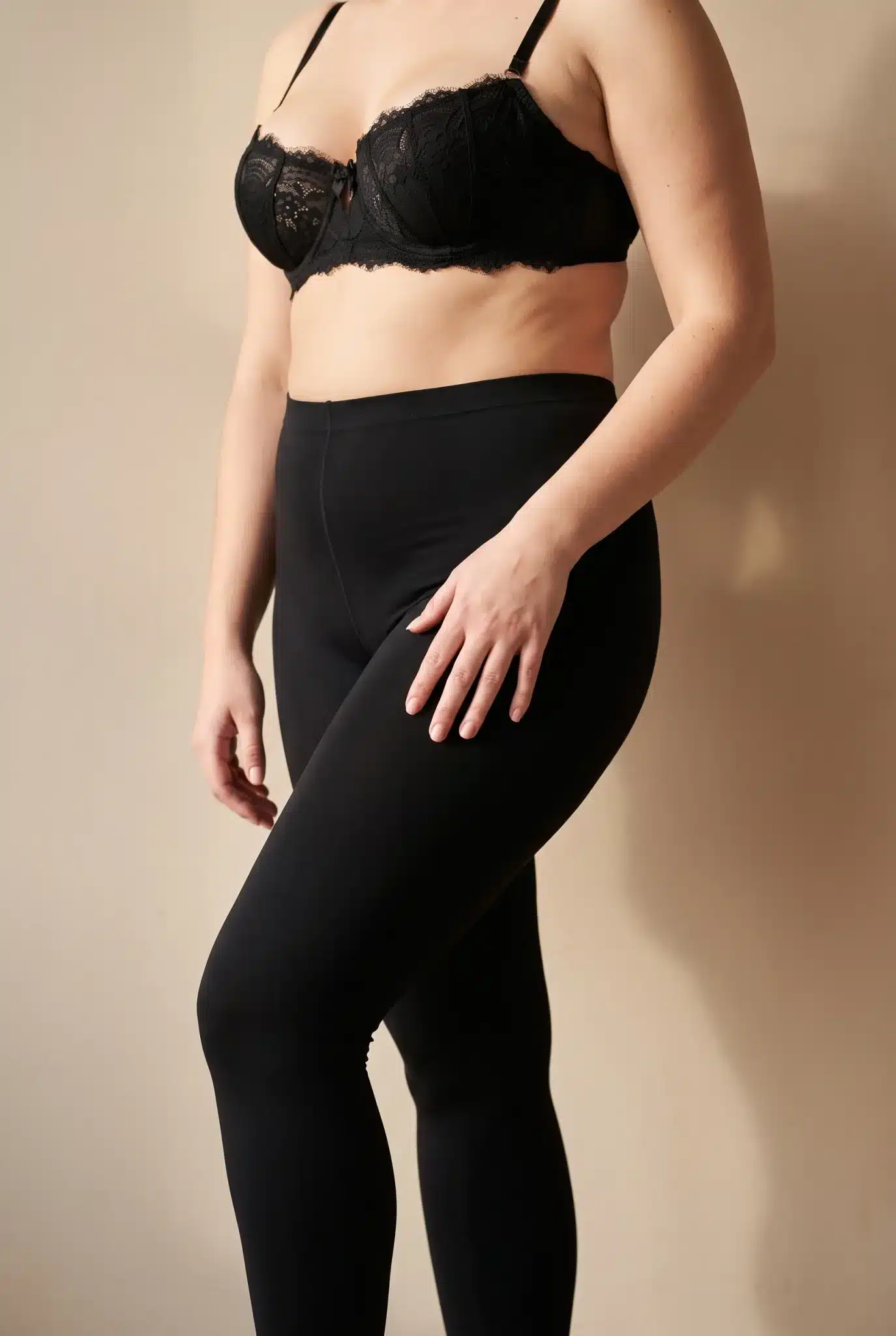
- Compression leggings: An everyday-friendly variant of tights — often more discreet under clothing
- Bermuda-style garments: For patients in whom mainly the thigh area is affected
- Arm garments: For lipedema of the arms — as an arm sleeve or with a hand piece
\n
\n
\n
\n
\n
\n\n
The choice of garment type depends on the distribution of the lipedema, the stage and individual everyday needs.
\n\n
Compression leggings in everyday life: practical tips
\n\n
Putting them on made easy
\n\n
- \n
- Put the compression garment on in the morning, before the legs swell
- Use special donning aids (frames or slip-on socks) — they make putting the garment on considerably easier
- Wear rubber gloves for a better grip and to protect the knit
- Pull the garment up in small steps — do not tug at the upper edge
\n
\n
\n
\n
\n\n
Care and durability
\n\n
- \n
- Wash daily at 30–40 °C on a gentle cycle or by hand
- Use a specialist detergent — no fabric softener, as it reduces the compression effect
- Dry flat — not on a radiator or in the tumble dryer
- Have two garments prescribed so that one is always ready as a change
- Every 6 months a replacement is due — the material loses its compression effect over time
\n
\n
\n
\n
\n
\n\n
Improving wearing comfort
\n\n
- \n
- Ensure an exact made-to-measure fit at the medical supply store — poorly fitting compression is of little use
- Try different colours and patterns — modern flat-knit garments are available in many designs
- In hot weather: cooling underwear or liners can improve wearing comfort
- In case of skin irritation: speak with your supplier about skin-friendly materials
\n
\n
\n
\n
\n\n
Compression and liposuction in lipedema
\n\n
Compression therapy is a central component of lipedema treatment — together with manual lymphatic drainage, exercise and skin care. It can ease symptoms but cannot treat the underlying cause of lipedema.
\n\n
Liposuction (fat removal) is currently the only method that can permanently remove the pathologically altered fatty tissue. After liposuction, many patients report that they are able to reduce the compression class or — in some cases — do without compression altogether.
\n\n
Important to know: even after liposuction, postoperative compression is initially worn for several weeks to support healing and reduce swelling.
\n\n
Whether and when surgical treatment is appropriate can only be clarified in an individual consultation. At BONITAS, I take the time to assess your situation comprehensively — from diagnostics through conservative options to surgical planning.
\n\n
Frequently asked questions: compression leggings for lipedema
\n\n
Do I have to wear the compression garment all day?
\n
As a rule, it is recommended to wear the compression garment continuously during the day and to take it off at night. In very warm weather or after consulting your physician, individual adjustments may be appropriate. Wearing it regularly is decisive for its effectiveness.
\n\n
Does my health insurer pay for my compression garment?
\n
Yes, with a confirmed lipedema diagnosis, statutory health insurers usually cover the costs of flat-knit compression garments — including two garments per year. The prerequisite is a medical prescription with the correct diagnosis and the compression class stated.
\n\n
Why must it not be circular-knit compression?
\n
Circular-knit compression is designed for evenly shaped legs (as in venous conditions). In lipedema, however, there is a disproportion — the legs are considerably more voluminous in relation to the upper body. Flat-knit compression adapts to these proportions without constricting.
\n\n
Can compression alone cure lipedema?
\n
Compression is an important pillar of conservative treatment, but it cannot cure the underlying cause of lipedema. It eases symptoms and can slow progression. Liposuction is the only method that permanently removes the altered fatty tissue. A comprehensive consultation helps to find the treatment strategy that is right for you individually.
\n\n
How do I find the right medical supply store?
\n
Make sure the medical supply store has experience with lipedema care and offers flat-knit made-to-measure garments. Good service includes precise measurement, a trial fitting and a follow-up check. Ask specifically for suppliers who specialise in lipedema.
\n
Medically reviewed and written by:
Alejandro Martí – Specialist in Plastic and Aesthetic Surgery (Facharzt, DE & ES)
Last reviewed: April 2026
Literature & Scientific Sources
- Kruppa P et al. „Lipedema – Pathogenesis, Diagnosis, and Treatment Options.” Deutsches Ärzteblatt International. 2020. PubMed PMID 32762835
- van la Parra RFD, Deconinck C. „Lipedema: What we don’t know.” Journal of Plastic, Reconstructive & Aesthetic Surgery. 2023. PubMed PMID 37390539
- Lundanes J et al. „Effect of a low-carbohydrate diet on pain and quality of life in female patients with lipedema: a randomized controlled trial.” Obesity. 2024. PubMed PMID 38627016
- Mortada H, Alhithlool AW. „Lipedema: Clinical Features, Diagnosis, and Management.” Archives of Plastic Surgery. 2025. PubMed PMID 40386000
- Buso G et al. „Lipedema: A Call to Action!.” Obesity (Silver Spring). 2019. PubMed PMID 31544340
- Forner-Cordero I et al. „Update in the management of lipedema.” International Angiology. 2021. PubMed PMID 33870676