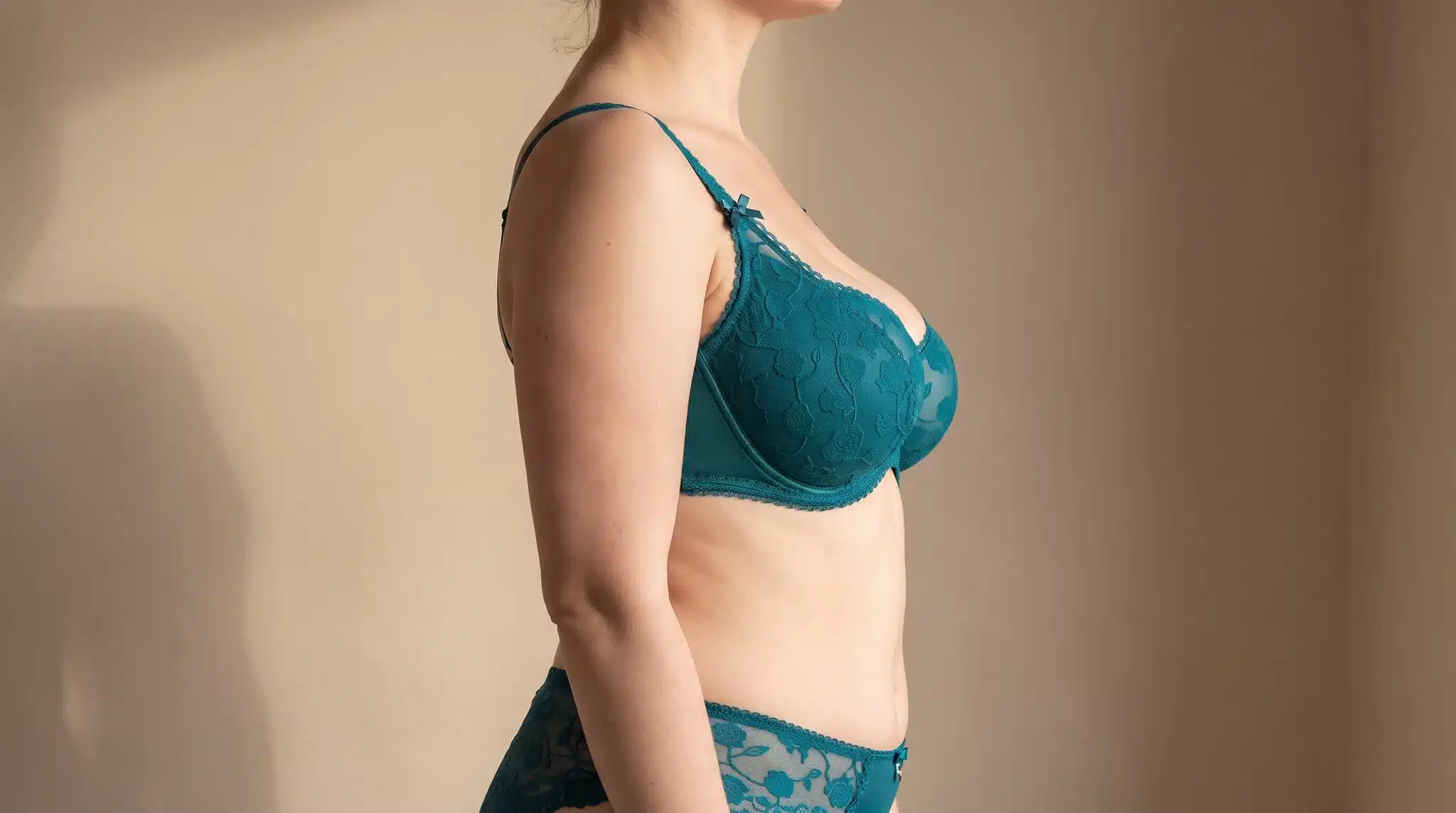
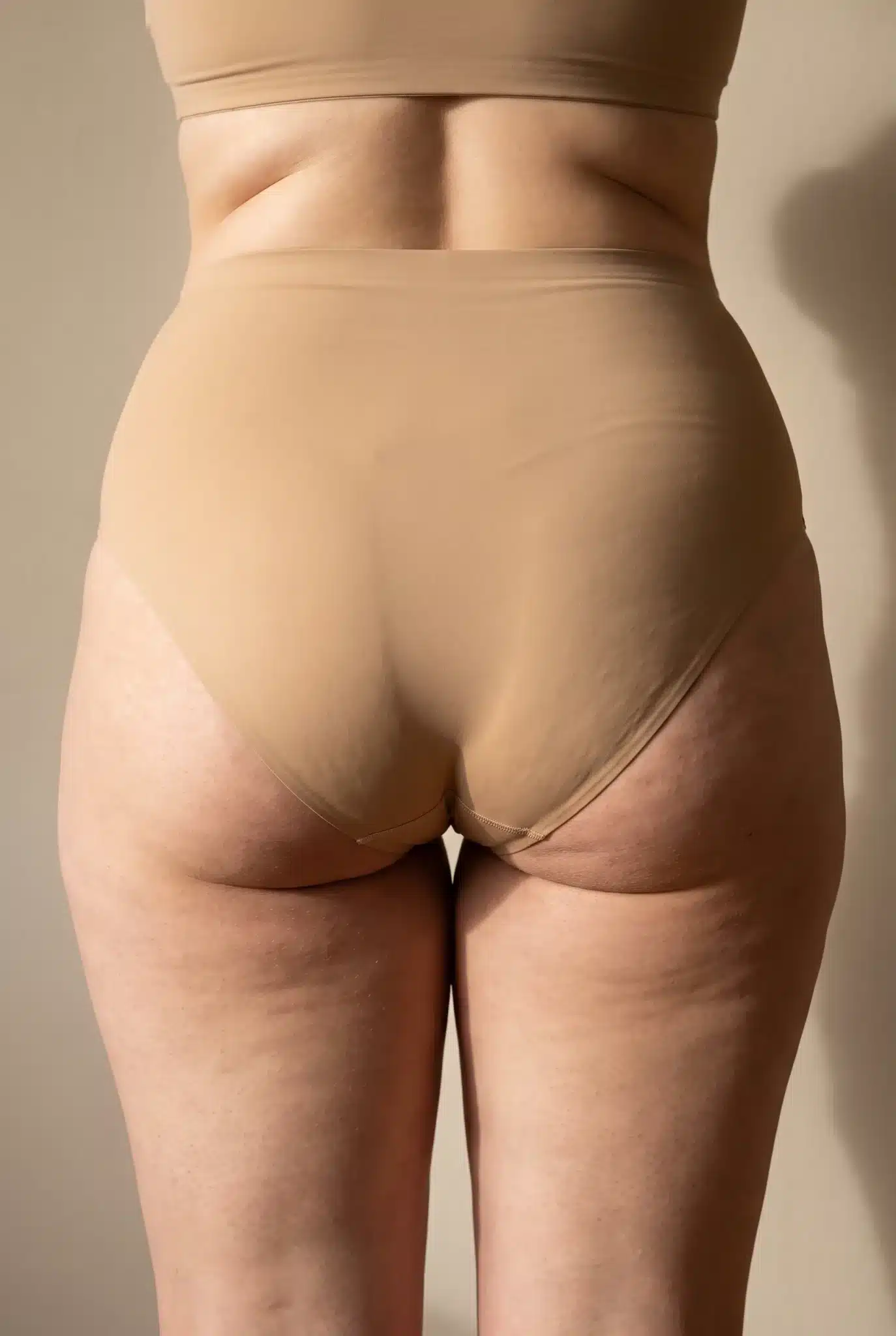
At a glance: Lipedema on the buttocks shows itself as a disproportionate, symmetrical increase of fatty tissue in the hip and buttock area that is painful and resistant to diets.
- Typical symptoms: pressure pain across the entire buttock area, a feeling of heaviness and tension that increases over the course of the day, a tendency to bruise, problems when sitting
- Difference from normal body fat: lipedema tissue is resistant to diets, painful and disproportionate; normal body fat responds to diet and exercise and is usually painless
- Stages: I smooth skin with finely nodular fatty tissue, II uneven skin with nodules and dents, III pronounced volume with bulge formation
- Conservative therapy: custom-made flat-knit compression, manual lymphatic drainage, joint-friendly exercise; the diseased fatty tissue cannot be removed this way
- After liposuction on the buttocks: surgery lasting approx. 2-3 hours, 4-6 weeks of compression garments, socially presentable after approx. 1-2 weeks, sport from approx. 6 weeks
Lipedema of the Buttocks — Symptoms, Diagnosis and Treatment
Lipedema consultation for the buttocks (gluteal region) is one of the most common manifestations of the condition — and at the same time one of the most underestimated. Many of those affected mistake the excess volume around the hips and buttocks for ordinary body fat and spend years trying in vain to reduce it through dieting and exercise. At BONITAS, we treat patients who are finally seeking clarity and a genuine solution.
How does lipedema of the buttocks present?
Lipedema of the gluteal region presents as a disproportionate, symmetrical increase in fatty tissue across the hips and buttocks. The symptoms include:
- A markedly enlarged buttock area in contrast to a comparatively slim upper body
- Pressure pain and tenderness throughout the entire gluteal region
- A sensation of heaviness and tension that increases over the course of the day
- A tendency to bruise — bruising occurs even after minor pressure
- Diet resistance: despite weight loss, the buttocks remain unchanged in volume
- Friction and skin irritation along the inner thighs caused by the increased volume
- Limitations in everyday life: difficulty sitting, choosing clothing, and exercising
The emotional dimension
The burden extends far beyond the physical. Many patients describe feelings of shame, social withdrawal and a sense of being trapped in their own body. This is compounded by the frustration that neither physicians nor those around them recognise the problem as a medical condition.
At BONITAS, we take these experiences seriously. Lipedema is not a matter of discipline — it is a medical condition.
Lipedema of the buttocks or ordinary body fat?
Not every large buttock area indicates lipedema. The distinction is important:
- Ordinary body fat responds to diet and exercise, is generally not painful and is distributed proportionately.
- Lipedematous tissue is diet-resistant, painful, prone to bruising and disproportionate to the rest of the body.
Further indications of lipedema of the buttocks:
- The problem began with a hormonal change (puberty, pregnancy, menopause)
- A family history — a mother, sister or grandmother with similar proportions
- The tissue feels nodular and shows a characteristic orange-peel texture
- Lipedema of the thighs is often present at the same time (the transition is gradual)
Stages of lipedema of the gluteal region
- Stage I: the skin surface is smooth, with finely nodular fatty tissue palpable beneath the skin. Pain on pressure.
- Stage II: the skin surface is uneven, with larger nodules and dimpling visible. Marked disproportion.
- Stage III: pronounced volume with tissue thickening and the formation of overhanging folds. Considerable restriction of mobility.
Lipedema is a progressive condition — it may advance over the years. Early diagnosis and treatment are therefore advantageous.
How is lipedema of the buttocks diagnosed?
The diagnosis is made clinically by an experienced specialist. The key elements are:
- A detailed medical history: the course of symptoms, hormonal history, family history and previous treatment attempts
- Physical examination: inspection of the body proportions, palpation (pressure pain, tissue quality) and circumference measurements
- Differential diagnosis: distinguishing the condition from obesity, lymphedema and lipohypertrophy
Imaging procedures (for example, ultrasound) may be used as a supplement, but are not strictly required to establish the diagnosis.
Treatment of lipedema of the buttocks
Conservative measures
Conservative therapy forms the foundation and comprises:
- Flat-knit compression: custom-fitted compression garments for the buttocks and legs
- Manual lymphatic drainage: applied regularly to reduce swelling and pain
- Exercise therapy: swimming, cycling, aqua fitness — gentle on the joints and supportive of lymphatic flow
- Nutrition: an anti-inflammatory diet can have a supportive effect
These measures relieve symptoms and can slow progression. The pathological fatty tissue itself, however, cannot be removed by conservative means.
Surgical therapy: liposuction
Liposuction for lipedema is the only method that can remove lipedematous fatty tissue in a targeted and lasting way. During liposuction of the buttocks:
- The pathological fatty tissue is gently aspirated through fine cannulas
- The natural shape of the buttocks is restored as far as possible
- Care is taken to maintain harmonious body proportions
The technique requires particular experience, as both functional and aesthetic aspects must be taken into account in the gluteal region. The aim is not the smallest possible buttocks, but a result that suits the individual patient and relieves discomfort.
Recovery after liposuction of the buttocks
- Duration of surgery: approximately 2–3 hours, depending on the extent
- Aftercare: 4–6 weeks of compression garments, accompanied by lymphatic drainage
- Sitting: use a seat cushion during the first few days and avoid prolonged sitting
- Ready for social activities: after approximately 1–2 weeks
- Exercise: gradually possible after approximately 6 weeks
- Final result: after approximately 3–6 months, once swelling has subsided and tissue remodelling is complete
Your consultation at BONITAS
Alejandro Martí is a specialist in Plastic and Aesthetic Surgery with sound experience in the surgical treatment of lipedema — including the demanding gluteal region.
At BONITAS, we take the time to understand your situation fully: your symptoms, your medical history and your goals. Together, we develop an individual treatment plan.
Arrange your personal consultation at BONITAS.
Frequently asked questions about lipedema of the buttocks
Can lipedema occur only in the buttocks?
In theory, yes, but in practice the buttocks are frequently affected together with the thighs. Over the years, lipedema may also spread to further areas of the body. A thorough examination of all potentially affected regions is important.
How can I tell whether my large buttocks are caused by lipedema rather than being genetic?
The boundaries are blurred — not least because lipedema itself has a genetic component. Key indications include: tenderness, diet resistance, a tendency to bruise and a striking disproportion to the upper body. If several of these points sound familiar, a medical assessment is advisable.
Does strength training help against lipedema of the buttocks?
Strength training can strengthen the muscles and improve general well-being. The lipedematous fatty tissue itself, however, is not reduced by training. Exercise is a valuable addition to therapy, but no substitute for targeted treatment.
Is liposuction of the buttocks particularly high-risk?
Every surgical procedure carries risks. Liposuction of the gluteal region requires particular anatomical knowledge and a precise technique. With an experienced specialist in Plastic Surgery, the risks are minimised. During the consultation, we will inform you in detail about possible complications and how often they occur.
How much fat can be removed during liposuction of the buttocks?
The amount depends on the individual findings. The aim is not maximum fat removal, but a reduction that relieves discomfort and restores harmonious proportions. During the consultation, your treating physician will provide a realistic assessment.
Medically reviewed and written by:
Alejandro Martí – Specialist in Plastic and Aesthetic Surgery 🇩🇪 🇪🇸
Last reviewed: April 2026
Literature & Scientific Sources
- Kruppa P et al. „Lipedema – Pathogenesis, Diagnosis, and Treatment Options.” Deutsches Ärzteblatt International. 2020. PubMed PMID 32762835
- van la Parra RFD, Deconinck C. „Lipedema: What we don’t know.” Journal of Plastic, Reconstructive & Aesthetic Surgery. 2023. PubMed PMID 37390539
- Lundanes J et al. „Effect of a low-carbohydrate diet on pain and quality of life in female patients with lipedema: a randomized controlled trial.” Obesity. 2024. PubMed PMID 38627016
- Mortada H, Alhithlool AW. „Lipedema: Clinical Features, Diagnosis, and Management.” Archives of Plastic Surgery. 2025. PubMed PMID 40386000
- Buso G et al. „Lipedema: A Call to Action!.” Obesity (Silver Spring). 2019. PubMed PMID 31544340
- Forner-Cordero I et al. „Update in the management of lipedema.” International Angiology. 2021. PubMed PMID 33870676