
Lipedema on the Back
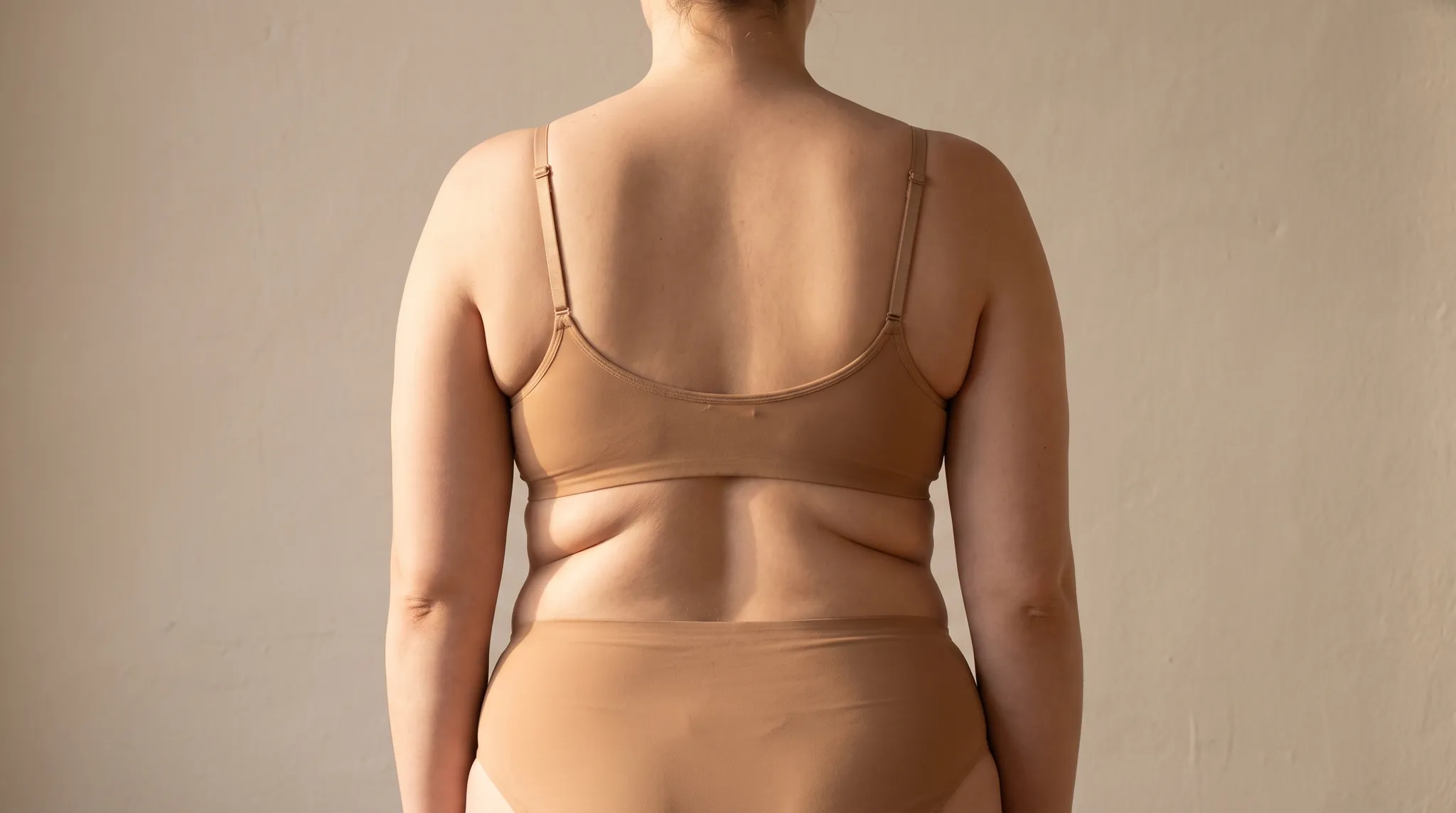
At a glance: lipedema on the back is a symmetrical, diet-resistant increase of fat on the flanks, the bra area and the upper back, which is sensitive to pressure and does not change through weight loss.
- Typical signs: sensitivity to pressure, a feeling of tightness over the course of the day, bulges above and below the bra fastening, bruises without any explainable cause
- Lipedema or excess weight: the fat pads remain despite weight loss, are symmetrical and sensitive to pressure and can feel nodular; normal back fat responds to a calorie-reduced diet and to training
- Treatment: compression garments, manual lymphatic drainage and joint-friendly exercise ease the symptoms; only liposuction removes the lipedematous fat tissue
- After the liposuction: surgery duration approx. 1.5 to 3 hours, 4 to 6 weeks of compression garment, presentable in public after approx. 1 to 2 weeks
- Cost coverage: since 9 October 2025 a statutory health insurance benefit irrespective of the stage, provided the medical requirements are met; BONITAS has no statutory health insurance licence (Kassensitz) and bills privately only
Lipedema on the Back — Recognising the Symptoms and Responding Correctly
Lipedema treatment on the back is a lesser-known but by no means rare form of fat distribution disorder. While most affected individuals associate lipedema with the legs and arms, the condition can also affect the back — with a considerable impact on well-being and quality of life. At BONITAS, we regularly see patients who have spent years trying in vain to reduce these fat deposits through exercise and diet.
How Does Lipedema on the Back Present?
Lipedema on the back presents as symmetrical, diet-resistant fat accumulations in the upper and lower back. The symptoms differ in part from the classic manifestation on the legs:
- Symmetrical fat deposits in the area of the flanks, the bra region and the upper back
- Pressure sensitivity and pain in the affected tissue
- A feeling of tension that may intensify over the course of the day
- Bulging above and below the bra fastening that does not change with weight loss
- A tendency to bruise — bruises on the back with no identifiable cause
- Psychological burden due to restrictions in choosing clothing and physical discomfort
Typical Descriptions from Our Patients
Many women report that they find the deposits on the back particularly distressing: bras dig in, tops do not fit properly, and the back looks disproportionate despite a normal weight on the rest of the body. The problem has often been present since puberty or has intensified after a pregnancy.
Lipedema on the Back or Ordinary Excess Weight?
This distinction is crucial — and not always straightforward. The following features point towards lipedema on the back:
- Diet resistance: The fat deposits on the back do not respond to weight loss, while other areas of the body become slimmer
- Symmetry: The distribution is strikingly even on both sides
- Painfulness: The tissue is sensitive to pressure — ordinary fat tissue is usually painless
- Tissue quality: The tissue may feel nodular or finely nodular
- Familial clustering: Other female family members have similar proportions
Ordinary excess weight on the back responds to a calorie-reduced diet and exercise. If the deposits on the back persist despite consistent measures, lipedema should be considered.
Stages and Progression
As in other regions of the body, lipedema on the back is classified into stages:
- Stage I: Smooth skin surface, finely nodular fat tissue palpable beneath the skin
- Stage II: Uneven skin surface, larger nodules palpable, more pronounced fat accumulations
- Stage III: Marked tissue with bulging and hardened structures
The earlier the diagnosis, the better the treatment options. Lipedema is a chronic condition that can progress if left untreated.
Treatment Options
Conservative Therapy
Baseline therapy comprises measures that can relieve symptoms and slow progression:
- Compression therapy: Specialised compression garments for the upper body
- Manual lymphatic drainage: To relieve the tissue and reduce the feeling of tension
- Exercise therapy: Joint-friendly activities such as swimming or aqua jogging
- Nutrition: An anti-inflammatory diet can provide supportive benefit
Important: Conservative measures can relieve the symptoms but cannot remove the lipedematous fat tissue.
Surgical Therapy: Liposuction
When conservative measures have been exhausted and quality of life remains impaired, liposuction for lipedema can specifically reduce the affected tissue.
During liposuction for lipedema on the back:
- The diseased fat tissue is gently removed using special cannulas
- The tumescent technique is used to minimise bleeding and support recovery
- Care is taken to restore the natural contour of the back
Liposuction is the only method that can actually remove the lipedematous fat tissue.
What to Expect After Liposuction on the Back
- Duration of surgery: Approx. 1.5–3 hours, depending on the extent
- Aftercare: 4–6 weeks of a compression garment, lymphatic drainage recommended
- Fit for social activities: After approx. 1–2 weeks
- Exercise: Gradually possible after approx. 4–6 weeks
- Final result: After approx. 3–6 months, once the swelling has fully subsided
Diagnosis and Consultation at BONITAS
Alejandro Martí is a specialist (Facharzt) in Plastic and Aesthetic Surgery with sound experience in the diagnosis and surgical treatment of lipedema — including the less typical locations such as the back.
During a personal consultation at BONITAS, we take the time to assess your situation comprehensively: medical history, physical examination, and an individual treatment recommendation.
Do you suspect lipedema on your back? Arrange your consultation at BONITAS.
Frequently Asked Questions About Lipedema on the Back
Is lipedema on the back rare?
It is less well known than lipedema on the legs, but by no means rare. Many affected individuals have the condition in several regions of the body at the same time. The back form is often overlooked because the focus is on the legs and arms.
Can I get rid of the fat deposits on my back through exercise?
If it is lipedematous fat tissue, targeted training will not significantly reduce the fat deposits. Exercise remains important nonetheless — for general health, the lymphatic system and well-being. However, it does not replace specific lipedema treatment.
How do I know whether the deposits on my back are lipedema?
If the deposits are symmetrical, do not respond to diet, are sensitive to pressure and you bruise easily, you should consider a medical evaluation. Only an experienced specialist can establish the diagnosis with certainty.
Is liposuction on the back covered by statutory health insurance?
Coverage by statutory health insurers is tied to certain requirements (stage, exhaustion of conservative therapy). At BONITAS, we treat privately insured patients and self-payers with individual care and short waiting times.
Medically reviewed and written by:
Alejandro Martí – Specialist (Facharzt) in Plastic and Aesthetic Surgery 🇩🇪 🇪🇸
Last reviewed: April 2026
Literature & Scientific Sources
- Kruppa P et al. „Lipedema – Pathogenesis, Diagnosis, and Treatment Options.” Deutsches Ärzteblatt International. 2020. PubMed PMID 32762835
- van la Parra RFD, Deconinck C. „Lipedema: What we don’t know.” Journal of Plastic, Reconstructive & Aesthetic Surgery. 2023. PubMed PMID 37390539
- Lundanes J et al. „Effect of a low-carbohydrate diet on pain and quality of life in female patients with lipedema: a randomized controlled trial.” Obesity. 2024. PubMed PMID 38627016
- Mortada H, Alhithlool AW. „Lipedema: Clinical Features, Diagnosis, and Management.” Archives of Plastic Surgery. 2025. PubMed PMID 40386000
- Buso G et al. „Lipedema: A Call to Action!.” Obesity (Silver Spring). 2019. PubMed PMID 31544340
- Forner-Cordero I et al. „Update in the management of lipedema.” International Angiology. 2021. PubMed PMID 33870676