
Lipedema or Excess Weight?
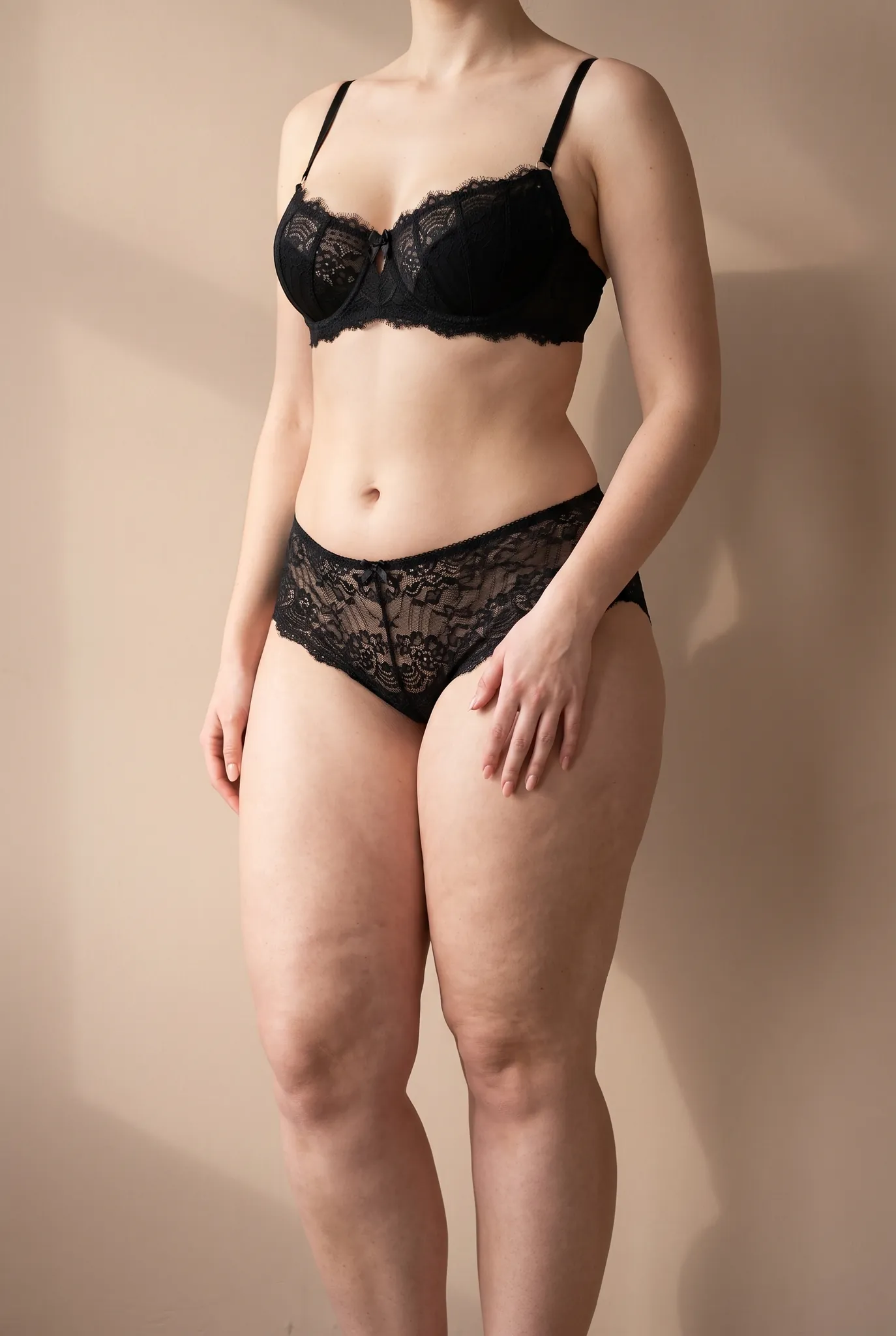
At a glance: Lipedema is a chronic fat distribution disorder with symmetrically and disproportionately increased fatty tissue on the legs, hips and sometimes the arms. With excess weight, fatty tissue increases across the whole body and can be reduced through dietary changes and exercise.
- Distribution: lipedema symmetrical on legs and arms with a slim trunk, excess weight spread evenly over the whole body
- Pain: lipedema with pressure pain, sensitivity to touch and a feeling of heaviness, excess weight usually painless
- Feet and hands: not affected in lipedema (known as the cuff sign), proportionally affected with excess weight
- Diet resistance: losing weight can slim the trunk, while legs and arms stay almost unchanged
- Onset: usually between the ages of 15 and 35, in connection with puberty, pregnancy, hormonal contraception or menopause
- Combination: lipedema and obesity often occur at the same time, which makes the diagnosis more difficult
Lipedema or Excess Weight — How to Tell the Difference
Many women ask themselves: Do I have lipedema or excess weight? The two are often confused — and understandably so. Both conditions can lead to increased body volume, particularly on the legs and hips. Yet the causes, lipedema symptoms and treatment approaches differ fundamentally. At BONITAS, we regularly see patients who receive the correct diagnosis only after years.
This article will help you understand the most important differences — and decide whether a medical consultation might be worthwhile.
What Is Lipedema?
Lipedema is a chronic fat distribution disorder that almost exclusively affects women. The fatty tissue increases symmetrically and disproportionately — usually on the legs and hips, and sometimes on the arms. What makes it distinctive: diet and exercise have no meaningful effect on these fat deposits.
Typical features of lipedema:
- Symmetrical fat distribution across both legs or arms
- Pain and tenderness to pressure in the affected tissue
- Tendency to bruise (hematomas) even with minimal contact
- Resistance to dieting: the affected areas do not shrink despite a reduction in caloric intake
- Disproportion: often a slender upper body alongside considerably more voluminous legs
- Worsening over the course of the day: heaviness and tension increase toward the evening
What Distinguishes Excess Weight from Lipedema?
With excess weight (obesity), fatty tissue increases across the entire body — including the abdomen, back and face. The key point: with excess weight, the fatty tissue can be reduced through dietary changes and physical activity.
Comparison: Lipedema vs. Excess Weight
- Distribution: Lipedema — symmetrical on the legs/arms, with a slender trunk. Excess weight — evenly distributed across the entire body.
- Pain: Lipedema — pressure pain, sensitivity to touch, heaviness. Excess weight — usually painless.
- Bruising: Lipedema — frequent, even after a light knock. Excess weight — normal.
- Effect of dieting: Lipedema — affects the trunk, not the areas typical of lipedema. Excess weight — reduction possible across the entire body.
- Feet and hands: Lipedema — not affected (a characteristic transition, the so-called cuff sign). Excess weight — proportionally affected.
- Stemmer’s sign: Lipedema — negative (a skin fold over the toe can be lifted). Lymphedema — positive.
- Hormonal connection: Lipedema — onset often during puberty, pregnancy or menopause. Excess weight — no hormonal trigger required.
- Symmetry: Lipedema — strikingly symmetrical. Excess weight — symmetrical, but proportional.
Self-Assessment: Could It Be Lipedema?
This assessment does not replace a medical diagnosis. It can, however, help you gather some initial indications. Answer the following questions honestly:
- Are your legs considerably more voluminous than your upper body?
- Do you feel that, despite consistent dieting, you are not losing weight on your legs?
- Do you regularly feel pressure pain or heaviness in your legs — especially in the evening?
- Do you bruise easily on your legs without recalling any knock?
- Do you feel that the problem began with a hormonal change (puberty, the pill, pregnancy, menopause)?
- Are your feet and hands slim while your legs or arms are noticeably fuller?
- Do family members have similar proportions?
If you answered yes to 3 or more questions, lipedema may be present. A medical evaluation is advisable.
Why the Correct Diagnosis Matters So Much
Many affected women struggle for years against what they believe to be excess weight — with diets, exercise and a growing sense of failure. If the underlying problem is lipedema, this path leads to frustration but not to a solution.
The correct diagnosis changes everything:
- You understand why certain measures have not worked
- You gain access to targeted treatment options (conservative and surgical)
- The psychological burden — shame, self-doubt, frustration — is acknowledged and addressed
- In cases where conservative therapy has been exhausted, liposuction can specifically treat the affected areas
Important: Lipedema and Excess Weight Can Occur Together
In practice, we frequently see a combination of lipedema and obesity (so-called lipedema with obesity). This makes the diagnosis even more challenging. An experienced specialist can distinguish between the components through clinical examination, medical history and, where appropriate, imaging procedures.
At BONITAS, we take the time this differential diagnosis requires.
How Is Lipedema Diagnosed?
The diagnosis is usually made clinically — that is, through a detailed discussion and a physical examination. Important criteria include:
- Medical history (course of symptoms, hormonal history, family history)
- Inspection and palpation (symmetry, pressure pain, tissue quality)
- Exclusion of other causes (lymphedema, venous insufficiency, obesity)
- Where appropriate, additional diagnostics (duplex ultrasound, MRI)
There is no single laboratory value or imaging finding that proves lipedema. This makes the experience of the treating physician all the more important.
Consultation at BONITAS
Alejandro Martí is a specialist in Plastic and Aesthetic Surgery with particular experience in the diagnosis and surgical treatment of lipedema. In a personal consultation, we clarify:
- Whether lipedema is present and at what stage
- Which conservative measures are sensible
- Whether and when liposuction may be considered
- Which results are realistic
Have your symptoms assessed professionally — arrange your consultation at BONITAS.
Frequently Asked Questions: Lipedema or Excess Weight
Can lipedema disappear through weight loss?
No. Lipedematous fatty tissue does not respond to diets or calorie-restricted nutrition. Weight loss can slim the trunk, but the affected areas (legs, arms) remain almost unchanged. This is one of the principal features of the condition.
At what age does lipedema appear?
Lipedema almost always begins in connection with hormonal changes: puberty, pregnancy, the use of hormonal contraception, or menopause. Most patients notice their first symptoms between the ages of 15 and 35.
Can my family doctor diagnose lipedema?
In principle, yes. In practice, however, many patients report that the condition went unrecognized for a long time. Seeing a specialist with experience in lipedema can provide clarity.
Does statutory health insurance cover the treatment?
Since the change in legislation, statutory health insurers cover the cost of liposuction for lipedema under certain conditions (from stage III, after conservative therapy has been exhausted). At BONITAS, we advise private patients and self-payers exclusively — with short waiting times and personal care.
Can I have lipedema and excess weight at the same time?
Yes, and this is in fact frequently the case. The combination makes the diagnosis more difficult. For this reason, a differentiated assessment by an experienced specialist is important in order to define the right treatment strategy.
Medically reviewed and written by:
Alejandro Martí – Specialist in Plastic and Aesthetic Surgery 🇩🇪 🇪🇸
Last reviewed: April 2026
Literature & Scientific Sources
- Kruppa P et al. „Lipedema – Pathogenesis, Diagnosis, and Treatment Options.” Deutsches Ärzteblatt International. 2020. PubMed PMID 32762835
- van la Parra RFD, Deconinck C. „Lipedema: What we don’t know.” Journal of Plastic, Reconstructive & Aesthetic Surgery. 2023. PubMed PMID 37390539
- Lundanes J et al. „Effect of a low-carbohydrate diet on pain and quality of life in female patients with lipedema: a randomized controlled trial.” Obesity. 2024. PubMed PMID 38627016
- Mortada H, Alhithlool AW. „Lipedema: Clinical Features, Diagnosis, and Management.” Archives of Plastic Surgery. 2025. PubMed PMID 40386000
- Buso G et al. „Lipedema: A Call to Action!.” Obesity (Silver Spring). 2019. PubMed PMID 31544340
- Forner-Cordero I et al. „Update in the management of lipedema.” International Angiology. 2021. PubMed PMID 33870676