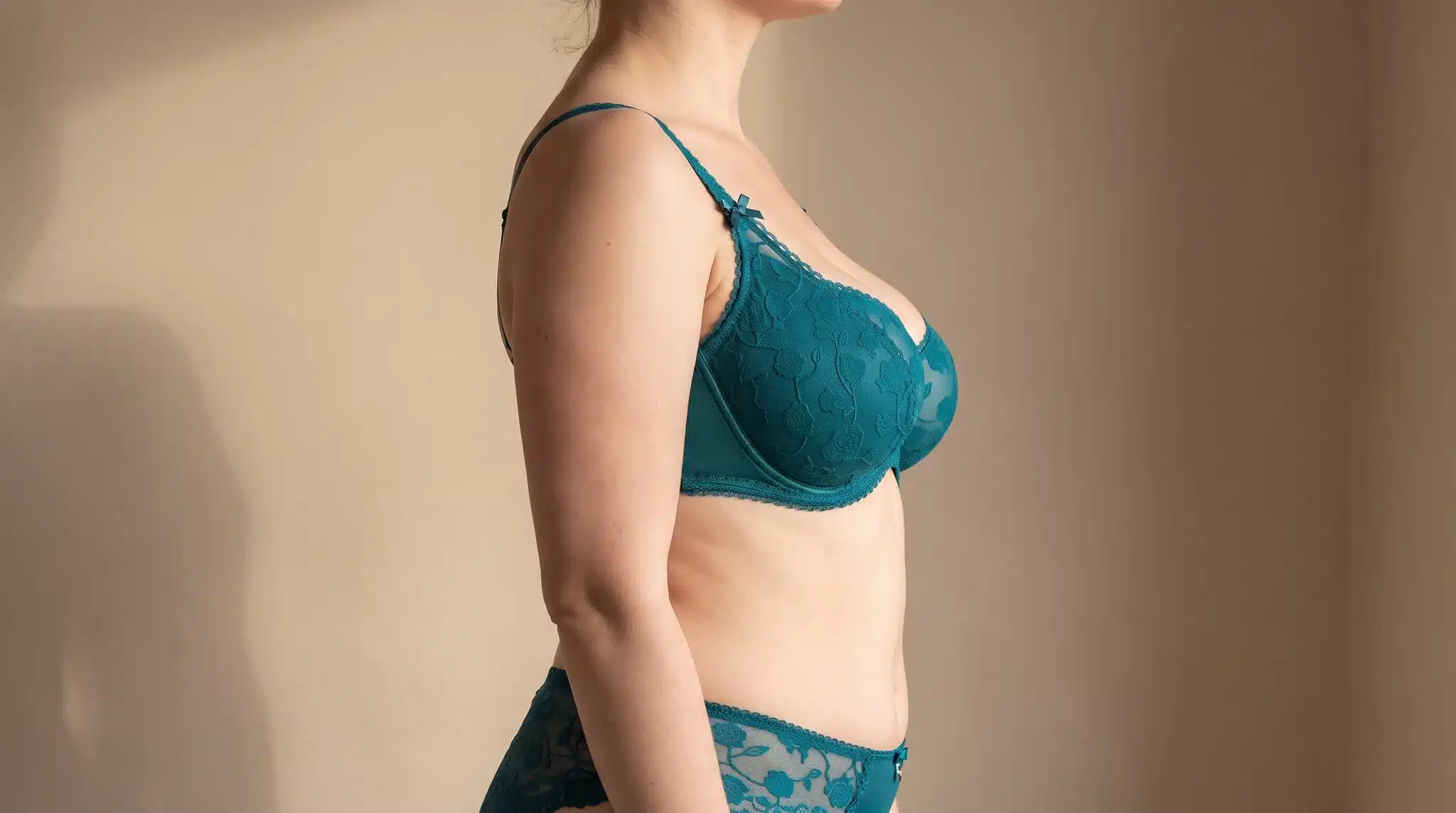

The tuberous breast is a congenital malformation of the breast characterised by a tube-like shape and asymmetric proportions. It is estimated to affect more than five percent of women and can be a source of psychological distress. The precise causes are not fully understood, but genetic factors and hormonal changes play a role. Early diagnosis and suitable treatment options are important for the women affected.
What is a tuberous breast?
The tuberous breast is a specific breast deformity defined by characteristic features that can affect many women. Examining this malformation provides insight into its definition, how it differs from a normal breast shape, and how often it occurs in the general population.
Definition of the tuberous breast
The tuberous breast, known medically as the tubular breast, is a congenital malformation of the mammary gland, inverted nipples. It presents as a narrow, elongated shape that deviates from the norm. Affected women may experience the deformity to varying degrees, which can influence both physical appearance and well-being.
Difference from a normal breast shape
Compared with a normal breast shape, the following differences can be observed in the tuberous breast:
- The base of the breast is constricted, resulting in a tube-like shape.
- The upper part of the breast is often disproportionately developed, while the lower region has less volume.
- The nipples may be enlarged and positioned atypically.
- Asymmetric shapes between the two breast surgery are common.
Frequency of the malformation
The tuberous breast is estimated to occur in more than five percent of women. This frequency shows that it is a relatively common deformity, although one that often receives little attention. The importance of an early understanding and appropriate support should be emphasised for the women affected.
Causes of the tuberous breast
The causes of the tuberous breast are complex and not yet fully understood. Various factors can contribute to the development of this breast deformity.
Genetic factors
Studies have shown that genetic influences play a significant role in the development of the tuberous breast. Certain gene mutations and hereditary predispositions may impair the normal development of the mammary gland. In families with a history of breast deformities, there is an increased likelihood that descendants will also be affected.
Influence of hormonal changes
Hormones play a decisive role in the development of breast tissue. During puberty in particular, hormonal fluctuations can affect the shape and size of the breasts. Insufficient production of oestrogen and progesterone can lead to faulty development. In addition, an increased sensitivity to these hormones may also be a cause.
Growth disturbances of the mammary gland
Growth disturbances during the development of the mammary glands can lead to the formation of a tuberous breast. Insufficient development of the breast tissue may cause the breast to take on an atypical shape. These disturbances can arise both during early physical development and as a result of external factors.
Symptoms and identifying features
The symptoms and identifying features of a tubular breast are varied and can differ from woman to woman. The most common physical changes are listed below.
Features of the tubular breast
The typical features of a tubular breast are characteristic and can be described using the following points:
- The base of the breast is markedly constricted, resulting in a tube-like shape.
- The lower region of the breast often has little volume, while the upper part is disproportionately developed.
- The nipples are frequently enlarged and may appear in a displaced position.
- The overall breast shape is pointed and may be asymmetric.
Asymmetries and proportions
Asymmetric breast shapes are a common feature of the tuberous breast. These asymmetries manifest in various proportions:
- One breast may be larger or smaller than the other.
- The position of the nipples may vary between the two breasts.
- The shape and contour of the breasts may differ, resulting in an uneven appearance.
Position and size of the nipples
The position and size of the nipples play a decisive role in identifying the tubular breast. Important aspects include:
- The nipples are frequently enlarged and may point downward.
- The position of the nipples can change drastically as a result of the altered breast shape.
- The distance between the nipples may vary depending on individual anatomy.
Psychological effects on the women affected
The psychological challenges faced by women living with this breast deformity are varied and often considerable. These challenges influence self-image, social interactions, and overall well-being.
Self-confidence and body perception
Many affected women report reduced self-esteem. The physical features associated with this deformity often lead to a negative body image. The following feelings may arise:
- Dissatisfaction with one’s own appearance.
- Fear of being judged by others.
- Avoidance of situations in which the body is exposed, such as swimming or visiting the sauna.
This negative body perception can affect all areas of life, both personal and professional. The feeling of not conforming to societal norms often reinforces existing insecurities.
Social consequences and intimacy
The impact on social interactions is considerable. Affected women often feel isolated and avoid social occasions. Intimacy is also frequently experienced as problematic:
- Reluctance to be naked in intimate situations.
- Difficulties in romantic relationships due to shame or insecurity.
- The fear of being judged or rejected by partners.
These social and intimate anxieties can lead to withdrawal from relationships and friendships, further affecting psychological well-being.
Support and opportunities for exchange
Connecting with others who are affected can be an important source of support. Groups that address the challenges of this breast deformity allow women to network and share experiences. The following forms of support are valuable:
- Participation in self-help groups.
- Online forums in which experiences and coping strategies are exchanged.
- Professional psychological support to improve self-esteem.
Such opportunities for contact can help reduce psychological pressure. Sharing experiences fosters understanding and makes it easier to cope with the emotional challenges.
Diagnosis of the tuberous breast
Diagnosing the tuberous breast involves several steps to establish the deformity and discuss suitable treatment options. An initial assessment can be made on the basis of specific features, followed by a thorough specialist examination.
Self-assessment of breast characteristics
Affected women can check some characteristics of their breasts themselves to determine whether a tuberous breast may be present. Important points for self-assessment include:
- How high does the inframammary fold sit? It is normally located at the level of the second to sixth rib.
- How asymmetric are the breasts? Differences between the two breasts should be noted.
- Does the breast show a downward droop (ptosis)?
- How pronounced is the lower region of the breast, located between the nipple and the inframammary fold?
- Does the nipple point strongly downward?
Specialist examination
For a comprehensive assessment, an appointment with a specialist in plastic and aesthetic surgery is necessary. The surgeon carries out a thorough examination, which typically takes the following aspects into account:
- Observation of breast shape and symmetry.
- Palpation of the breast tissue to check for any additional abnormalities.
- Hormonal analyses, if hormonal disorders are suspected.
Criteria for a medical diagnosis
The medical diagnosis of a tuberous breast is based on established criteria applied by a specialist. These include:
- Confirmation of the characteristic features of a tubular breast during the examination.
- Assessment of the severity and extent of the deformity.
- Consideration of the patient’s personal history and the symptoms she experiences.
Treatment options
Treatment options for a tuberous breast are wide-ranging and depend on the individual extent of the malformation. Both surgical and non-surgical approaches can be considered to improve the function and aesthetic appearance of the breast.
Surgical options
Surgical procedures are often the main route to correcting a tube-shaped breast. Various techniques are available, depending on the severity of the deformity and the patient’s specific needs.
Unfurling method
In the unfurling method, a fibrotic ring that influences the breast shape is divided. This allows the breast tissue to return to a more natural, rounded shape. This technique is particularly suitable for women with pronounced asymmetric features.
Criss-cross technique
The criss-cross technique is a precise surgical method in which tissue is reshaped. The aim is to create a fuller and more symmetric breast shape. This method requires extensive surgical experience, as it involves precise incisions.
Autologous fat transfer
In some cases, autologous fat transfer can be used to increase breast volume. In this procedure, fatty tissue is harvested from other areas of the body and transferred to the breast. This can offer a natural option for improving the breast shape.
Non-surgical approaches
Non-surgical treatment options are also available and can be a suitable alternative in certain cases. These methods aim to strengthen self-confidence and improve the appearance of the breast without surgical intervention.
The role of plastic and aesthetic surgery
Plastic and aesthetic surgery plays a central role in the treatment of the tuberous breast. Thanks to their specialisation in breast surgery, specialists in plastic surgery can develop individual treatment plans. A thorough consultation and a realistic assessment of the possible outcomes are essential to manage patients’ expectations and to achieve a satisfactory result.
Before-and-after outcomes and images
Documenting outcomes before and after treatment can play an important role in illustrating the changes following a procedure. Such visual comparisons can give affected women a realistic understanding of what a procedure may involve.
The significance of before-and-after documentation
Before-and-after documentation is important to many patients because it can:
- provide a visual representation of the treatment outcome,
- illustrate how the breast may change and be improved,
- create transparency regarding the treatment methods,
- serve as a reference for future patients.
Such documentation helps to record the individual changes in appearance and can also reflect the emotional state of the women affected.
Accounts from affected women
Accounts from women who have undergone treatment often describe emotionally meaningful changes. Some important aspects from these accounts include:
- improved self-confidence after surgery,
- positive effects on social interactions and intimacy,
- reports of a renewed quality of life and satisfaction with one’s own body.
Shared experiences can give other women encouragement and inspiration to take this step.
Prospects and satisfaction
Surgical treatment generally has favourable prospects, as documented in numerous studies. Factors that contribute to high satisfaction include:
- the ability to align one’s own expectations with the results,
- the professionalism and expertise of the treating surgeons,
- comprehensive aftercare that supports the healing process.
Satisfaction after treatment nevertheless varies from person to person, and it is important that affected women hold realistic expectations of the results.
Cost coverage and financing questions
Treatment options for the tubular breast lift can involve high costs. It is therefore important to be informed about the financial aspects and the possible options for cost coverage.
Cost of treatment
The cost of treating the tuberous breast depends on various factors, including the chosen surgical method, the complexity of the case, and the practice in which the procedure is performed. In general, treatment costs may break down as follows:
- Surgical procedures: prices for operations can range from several thousand to more than ten thousand euros.
- Aftercare and re-evaluation: regular follow-up examinations and postoperative therapies are also cost factors.
- Additional treatments: in some cases, additional non-surgical measures are required, which also contribute to the overall cost.
Possibilities for cost coverage by health insurers
Cost coverage by statutory and private health insurers can vary. As a general rule:
- Where there is demonstrable psychological distress and impairment of quality of life, there is often an entitlement to cost coverage.
- A detailed medical report may be required to substantiate the need for treatment.
- Before undergoing surgery, the health insurer should be contacted early to clarify reimbursement.
Financing options for those affected
If the costs are not fully covered by the health insurer, there are various financing options:
- Instalment payments: many practices offer the option of settling treatment costs in instalments.
- Private loans: banks or financing providers that offer special loans for medical treatments can also be consulted.
- Foundations and support funds: in some cases, those affected can receive financial assistance from non-profit organisations or foundations.
Long-term aftercare and complications
Adequate aftercare is of great importance following a correction of the breast shape. Regular monitoring supports patients’ health and helps to identify possible complications at an early stage.
Regular check-ups and follow-up treatments
After the surgical procedure, regular follow-up examinations are necessary to monitor the healing process. These appointments generally include:
- Physical examinations by specialists to assess the condition of the breast tissue.
- Ultrasound examinations to detect any changes in the tissue.
- Checks of the surgical scars and assessment of the aesthetic results.
These regular check-ups are essential to help ensure the long-term success of the treatment and to address any problems at an early stage.
Potential risks and complications
Although most women report positive results after a sagging breasts correction, there are nevertheless potential risks that should be taken into account. These include:
- Infections at the surgical site.
- Scar formation that differs from expectations.
- Changes in the sensitivity of the nipples.
- Complications related to implants, if these were used.
The most sensitive phase after surgery is often the first few months, during which the tissue heals and adapts to its new shape. Close collaboration with the treating surgeon is therefore essential.
Ability to breastfeed and effects on breastfeeding
After a correction, some women may not be able to breastfeed, depending on the type and severity of the breast deformity. Factors that can influence the ability to breastfeed include:
- The preservation of mammary gland tissue during surgery.
- The effects of surgery on the nerves of the breast.
- The general health and breastfeeding behaviour of the woman affected.
It is important that affected women are informed in advance about possible limitations and the associated effects. This allows for an informed decision about the treatment and its long-term consequences.
Do you have questions about the treatment of the tuberous breast, or would you like to learn more about the possible options? Arrange a consultation appointment with us.
Medically reviewed and written by:
Alejandro Martí – Specialist in Plastic and Aesthetic Surgery 🇩🇪 🇪🇸
Last reviewed: April 2026
Literature & Scientific Sources
- El Israwi D et al. „The Surgical Treatment of Tuberous Breast Deformity: A Review Article.“ Annals of Plastic Surgery. 2023. PubMed PMID 37566822
- Zholtikov V et al. „Tuberous Breast Deformity Correction: 12-year Experience.“ Aesthetic Plastic Surgery. 2019. PubMed PMID 30411146
- Faure A et al. „[Tuberous breast deformity correction: Long-term satisfaction assessment with BREAST-Q questionnaire].“ Annales de Chirurgie Plastique Et Esthetique. 2021. PubMed PMID 34563409
- Aggarwal S, Niranjan NS. „Tuberous breast deformity: A modified technique for single-stage correction.“ Indian Journal of Plastic Surgery: Official Publication of the Association of Plastic Surgeons of India. 2016. PubMed PMID 27833277
- Innocenti A. „Tuberous Breast Deformity Correction: 12-Years Experience.“ Aesthetic Plastic Surgery. 2019. PubMed PMID 30659306