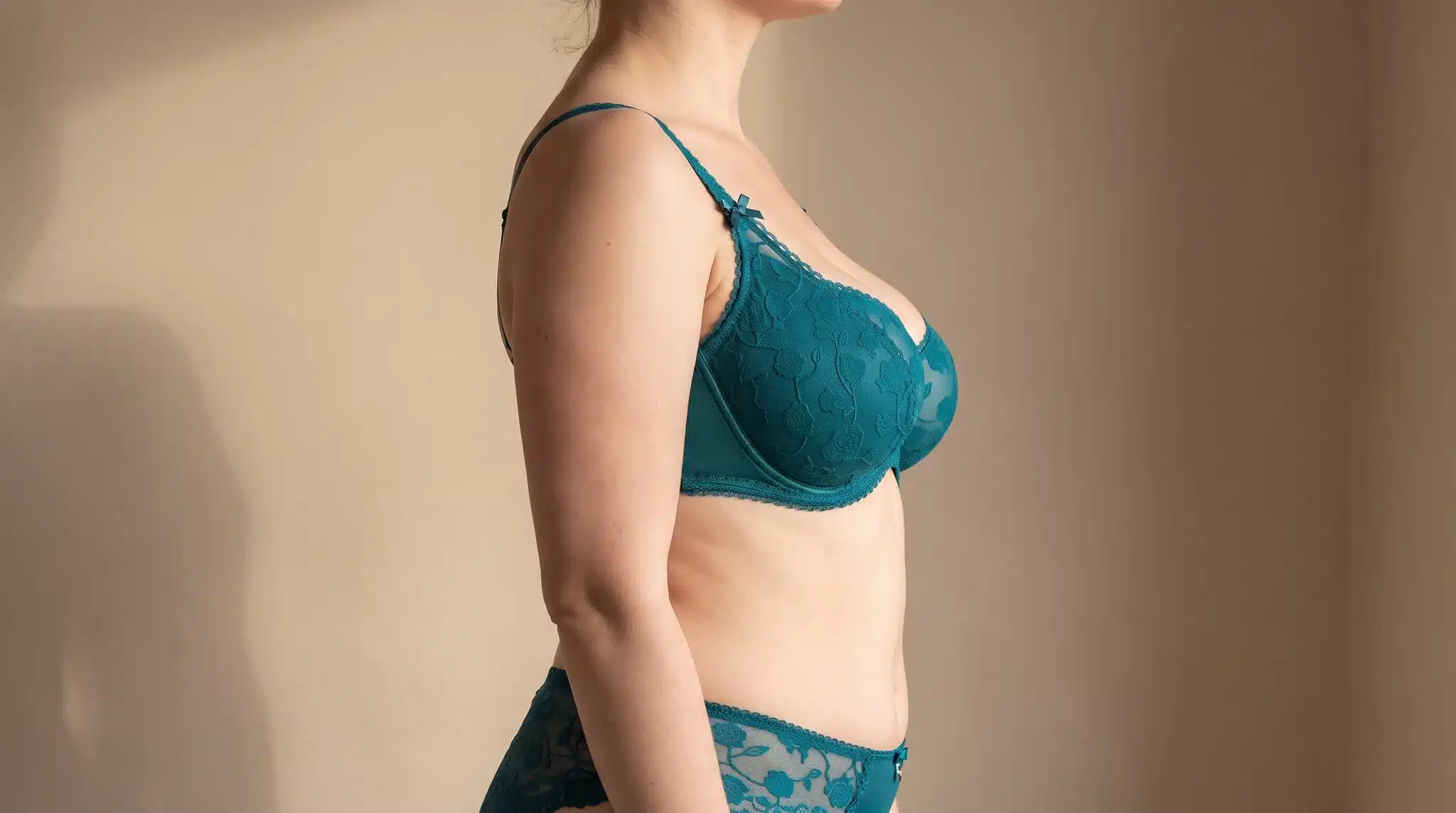
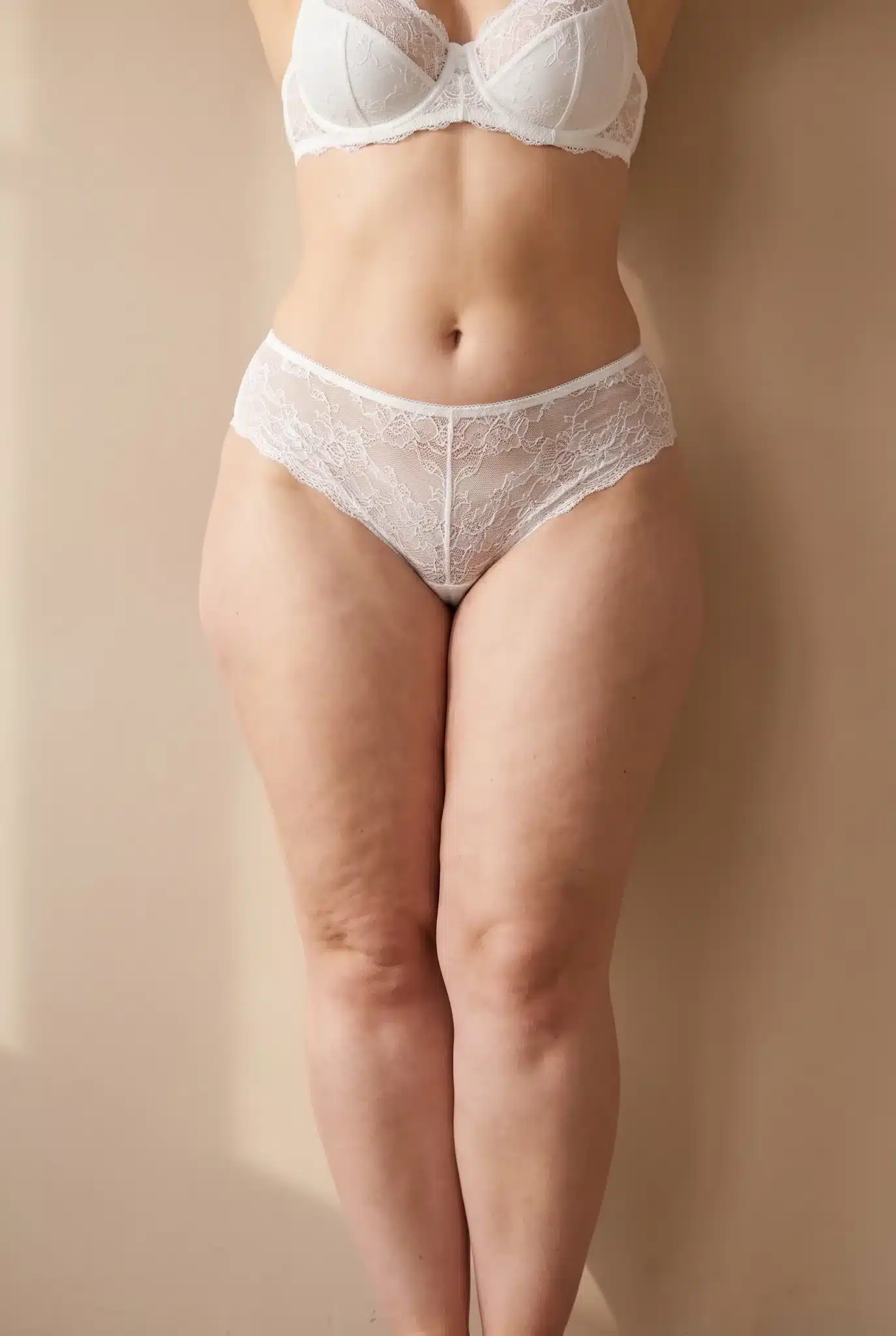
At a glance: Lipedema fat tissue barely responds to a calorie deficit: when you lose weight, your body first breaks down the normal fat on the torso, while the legs and arms stay almost unchanged.
- Consequence of a diet: The disproportion between the upper body and the legs even increases
- Anti-inflammatory nutrition: Vegetables, berries, nuts, olive oil, avocado, oily fish, little sugar and white flour, at least 1.5 to 2 litres of water a day
- Suitable exercise: Swimming, aqua aerobics, cycling, walking, yoga, Pilates; less suitable are sports with a strong impact load
- Compression: Flat-knit stockings or leggings; round-knit compression stockings for veins are usually not enough in lipedema
- Liposuction: Water-jet assisted (WAL) or in tumescent technique, often two to four sessions depending on the findings
Losing weight with lipedema — why conventional diets fail
Anyone living with lipedema knows the frustration: despite a disciplined diet and regular exercise, the affected areas on the legs or arms barely change. While the torso becomes slimmer, the thighs, hips and lower legs remain almost unchanged. This is not due to a lack of willpower — it is the nature of the condition. When it comes to losing weight with lipedema, different rules apply than with ordinary excess weight. In this guide, we explain why this is the case and what can genuinely help.
Lipedema fat tissue is not the same as normal fat tissue
To understand why diets often fail in lipedema, a basic understanding of the condition is important.
Lipedema is a chronic, usually progressive condition in which the subcutaneous fat tissue increases abnormally — symmetrically on the legs and/or arms. This fat tissue differs fundamentally from „normal“ body fat:
- It barely responds to a calorie deficit. While normal fat tissue is broken down when there is a negative energy balance, lipedema fat tissue largely persists.
- It is chronically inflamed. Inflammatory processes take place within lipedema tissue, leading to pain, pressure sensitivity and swelling.
- The capillaries are more fragile. This is why affected individuals are prone to bruising and fluid retention.
- It is hormonally influenced. Lipedema typically begins or worsens during phases of hormonal change — puberty, pregnancy, menopause.
Why diets do not work for lipedema
Conventional diets aim to create a calorie deficit so that the body uses stored fat as a source of energy. In lipedema, the following happens:
- The body first breaks down „normal“ fat tissue — on the torso, in the face, on the arms (if they are not affected)
- The lipedema fat tissue on the legs and arms remains almost unchanged
- The disproportion between the upper body and the legs may even increase
- Frustration and feelings of guilt intensify
Many women report that, over the years, they have gone through numerous diets, dietary changes and exercise programmes — without any visible change to the affected areas. This is not a personal failure. It is the biology of the condition.
What can still help with weight loss in lipedema
Even though lipedema fat tissue itself is barely influenced by diet and exercise, a healthy lifestyle is particularly important for those affected. The focus here is not on weight loss in the affected areas, but on:
1. Anti-inflammatory nutrition
Since lipedema has an inflammatory component, an anti-inflammatory diet may ease the symptoms:
- Plenty of vegetables, berries, nuts and healthy fats (olive oil, avocado, oily fish)
- Reducing sugar, highly processed foods and white-flour products
- Sufficient water — at least 1.5 to 2 litres per day
- Some affected individuals report improvements with a gluten-free or dairy-free diet — this varies from person to person
Such a diet can reduce swelling, ease pain and improve general well-being. However, it does not dissolve the lipedema fat tissue.
2. Exercise — joint-friendly and regular
Exercise is essential for women with lipedema — however, not all types of sport are equally suitable:
- Recommended: swimming, aqua aerobics, cycling, walking, yoga, Pilates
- Less suitable: sports with high impact loading (running on hard surfaces, intensive jumping movements)
The water pressure during swimming or aqua aerobics acts like a natural form of compression and can temporarily ease swelling and a feeling of heaviness.
3. Compression therapy
Flat-knit compression stockings or leggings are a cornerstone of conservative lipedema therapy. They:
- Slow down fluid retention in the tissue
- Reduce feelings of tension and heaviness
- Can lessen pain in everyday life
- Support the effectiveness of exercise
Important: the compression must be individually fitted. Round-knit compression stockings, such as those used for venous disorders, are generally not sufficient for lipedema.
4. Manual lymphatic drainage
Regular manual lymphatic drainage can help to reduce fluid retention and ease the symptoms. It is often prescribed as part of complex decongestive therapy (CDT).
When is liposuction an appropriate option?
If conservative measures do not sufficiently ease the symptoms, a specialised liposuction for lipedema may be considered. This differs significantly from cosmetic liposuction:
- Water-jet-assisted liposuction (WAL) or tumescent liposuction are the common gentle techniques
- The aim is the removal of the abnormally increased lipedema fat tissue
- The lymphatic vessels are largely preserved in the process
- Several sessions are often required, depending on the extent of the findings
Liposuction for lipedema should only be performed by an experienced specialist (Facharzt) in Plastic and Aesthetic Surgery who is familiar with the condition and the specific surgical techniques.
Lipedema consultation at BONITAS
Alejandro Martí, board-certified specialist (Facharzt) in Plastic and Aesthetic Surgery, focuses on the treatment of lipedema. At the BONITAS practice, you will receive a detailed, individual consultation — from the initial diagnosis through conservative options to surgical therapy.
We know that many of those affected have a long journey behind them before they are heard. That is precisely why we take the time to understand your story and to find the right path together. If you would like to learn more about your options, we look forward to hearing from you.
Frequently asked questions about losing weight with lipedema
Can I cure my lipedema with the right diet?
No. Lipedema is a chronic condition that cannot be cured by diet alone. However, a healthy, anti-inflammatory diet can ease symptoms, reduce fluid retention and improve general well-being. The lipedema fat tissue that is already present is not broken down by this, though.
Does exercise help against lipedema?
Exercise is highly recommended, but it cannot specifically reduce the lipedema fat tissue. Regular joint-friendly exercise — especially in water — improves lymphatic circulation, reduces swelling and enhances quality of life. In combination with compression therapy, the effect is greatest.
When does statutory health insurance cover liposuction for lipedema?
Since 2024, statutory health insurers in Germany can cover the cost of liposuction for lipedema from stage III onwards, provided that conservative therapy has been carried out for at least six months without sufficient success. The exact requirements are currently being further developed. Private health insurers handle cost coverage on an individual basis. During the consultation, we will inform you about the current regulations.
How many sessions are needed for lipedema liposuction?
This depends on the extent of the findings. Often, two to four sessions are planned at intervals in order to treat the various affected areas gently. The individual treatment plan is drawn up during the personal consultation.
Does lipedema come back after liposuction?
Studies show that the results of lipedema liposuction can remain stable over the long term. The removed fat cells do not regenerate. A healthy lifestyle and compression therapy support the long-term result. Since lipedema is a chronic condition, regular follow-up checks are advisable.
Medically reviewed and written by:
Alejandro Martí – Specialist (Facharzt) in Plastic and Aesthetic Surgery 🇩🇪 🇪🇸
Last reviewed: April 2026
Literature & Scientific Sources
- Kruppa P et al. „Lipedema – Pathogenesis, Diagnosis, and Treatment Options.” Deutsches Ärzteblatt International. 2020. PubMed PMID 32762835
- van la Parra RFD, Deconinck C. „Lipedema: What we don’t know.” Journal of Plastic, Reconstructive & Aesthetic Surgery. 2023. PubMed PMID 37390539
- Lundanes J et al. „Effect of a low-carbohydrate diet on pain and quality of life in female patients with lipedema: a randomized controlled trial.” Obesity. 2024. PubMed PMID 38627016
- Mortada H, Alhithlool AW. „Lipedema: Clinical Features, Diagnosis, and Management.” Archives of Plastic Surgery. 2025. PubMed PMID 40386000
- Buso G et al. „Lipedema: A Call to Action!.” Obesity (Silver Spring). 2019. PubMed PMID 31544340
- Forner-Cordero I et al. „Update in the management of lipedema.” International Angiology. 2021. PubMed PMID 33870676