
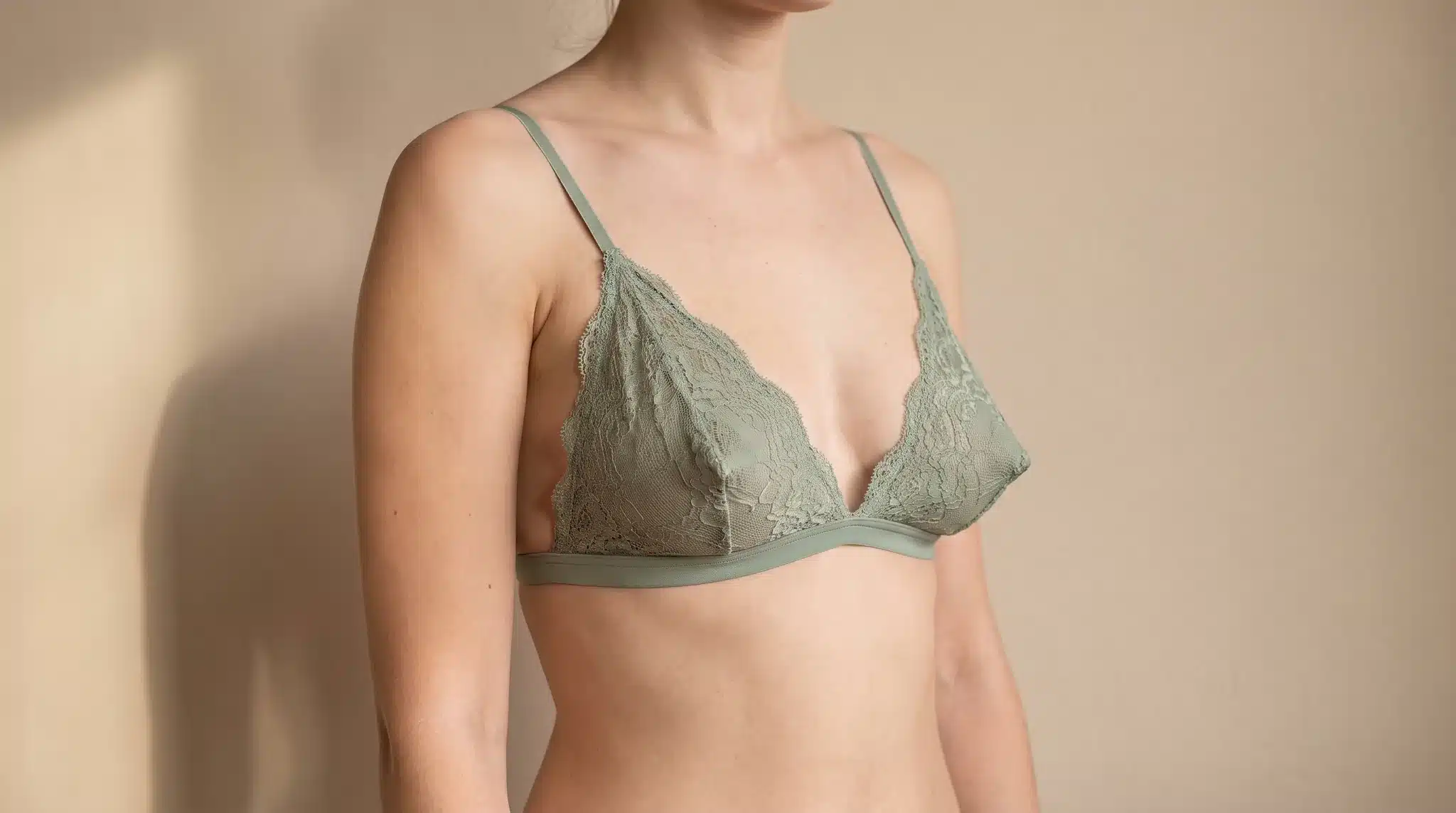
Tuberous breast — what lies behind this breast malformation?
The tuberous breast — also known as tubular breast, constricted breast or tuberous breast deformity — is a congenital malformation of the female breast that occurs more frequently than many people realise. Estimates suggest that up to 5% of all women have some form of tuberous breast, with mild presentations often going unrecognised. For the women affected, this breast shape frequently represents a considerable psychological burden. In this article we explain what defines the tuberous breast from a medical perspective, which degrees of severity exist and which surgical breast correction options are available.
What is a tuberous breast?
In the tuberous breast, the development of the mammary gland is disrupted during puberty. A constricting ring of connective tissue forms at the base of the breast, preventing the breast from growing normally. The result is a breast with characteristic features:
- Narrow, constricted breast base — the breast does not attach broadly to the chest wall but instead appears tubular
- Herniation of the glandular tissue — the breast tissue pushes forward through the areola, which then appears enlarged and protruding
- High inframammary fold — the inframammary fold sits higher than is anatomically usual
- Asymmetry — frequently the two breasts are affected to differing degrees
- Limited tissue volume — particularly in the lower and lateral quadrants
The Grolleau classification
Internationally, the tuberous breast is most often categorised according to the Grolleau classification, which distinguishes three degrees of severity:
- Grade I (mild): The lower inner quadrant of the breast is underdeveloped. The breast appears slightly directed outwards, but the overall shape is often only mildly altered. Many women notice merely a subtle asymmetry.
- Grade II (moderate): Both lower quadrants (inner and outer) are affected. The breast base is markedly constricted and the areola begins to protrude. The breast appears “empty towards the lower pole”.
- Grade III (pronounced): All four quadrants are affected. The breast has a distinctly tuberous (tubular) shape, the base is severely constricted, and the herniation through the areola is prominent. In these cases there is usually a considerable subjective burden.
Why does the tuberous breast cause so much distress?
From a medical point of view, the tuberous breast is not a dangerous condition. It does not necessarily impair the ability to breastfeed, nor does it affect physical health. Nevertheless, the women affected frequently report:
- Embarrassment when undressing, in relationships or during sport
- Difficulty finding well-fitting bras or swimwear
- A sense that their own breast does not look “normal”
- Years of insecurity because the condition was never diagnosed
Many women only learn in adulthood that their breast shape has a medical name. Simply having this knowledge can already provide relief.
How is a tuberous breast corrected?
The correction of the tuberous breast is among the most demanding procedures in breast surgery. It is not enough simply to place a breast augmentation with implants — the distinctive anatomy calls for an individual surgical strategy that combines several techniques.
Releasing the constricting ring (scoring)
The constricting connective tissue at the breast base is incised from the inside (so-called “scoring” or radial release). This allows the breast tissue to expand into the lower quadrants and take on a more natural shape. This step is decisive for the outcome.
Breast implant
An anatomically shaped or round implant can add volume and fill out the breast shape — particularly in the underdeveloped areas. The choice of implant (size, profile, position) is guided by the individual findings and the patient’s wishes.
Autologous fat transfer (lipofilling)
In milder forms, or as a complement to an implant, the patient’s own fatty tissue can be introduced into the breast. The advantage: a particularly natural result. The drawback: a limited volume gain per session, and a donor site for the fat harvest is required.
Reduction of the areola
Herniation of the glandular tissue through the areola often leads to an enlarged areolar complex. In most cases, reduction of the areola is part of the correction and contributes substantially to a harmonious overall appearance.
Repositioning of the inframammary fold
The inframammary fold, which frequently sits too high, is moved downwards to achieve a natural breast shape with appropriate fullness in the lower pole.
What you can expect from the correction
The correction of a tuberous breast is not a standard procedure. Every breast is different, and the combination of techniques must be planned individually. The following points are important:
- In many cases a single procedure is sufficient, although follow-up procedures are sometimes advisable
- Complete symmetry is not always achievable — natural breasts are never entirely symmetrical
- The scars depend on the technique chosen — frequently periareolar, and for more extensive corrections also vertical
- The final result becomes apparent after 6 to 12 months
Consultation at BONITAS
If you suspect that you have a tuberous breast, the first step is a personal consultation. Alejandro Martí, specialist in Plastic and Aesthetic Surgery, takes the time to analyse your anatomy, classify the degree of severity and work out an individual treatment plan together with you.
At BONITAS, the focus is not on a quick fix but on a result that suits you — natural and harmonious.
Frequently asked questions
How can I tell whether I have a tuberous breast?
Typical signs include a narrow breast base, a protruding areola, limited fullness in the lower part of the breast and a marked asymmetry. A reliable diagnosis can only be made by a specialist in Plastic Surgery as part of a clinical examination.
Is the correction of a tuberous breast a medical service?
In pronounced cases (particularly Grade II and III), the tuberous breast may be classified as a breast malformation. Whether the statutory health insurer covers the costs depends on the individual case, the degree of severity and the insurer’s position. Specialist documentation is a prerequisite for an application.
What scars result from the surgery?
In milder forms, a periareolar incision (around the areola) is often sufficient. For more extensive corrections, a vertical incision running downwards may be necessary. As a rule, the scars fade markedly over 12 to 18 months.
Can I breastfeed after the correction?
In most cases the ability to breastfeed is preserved, as the milk ducts are spared. However, the ability to breastfeed may already be limited in a tuberous breast before surgery — this depends on the extent of glandular tissue development.
From what age is a correction possible?
A correction is advisable once breast development is complete — as a rule from the age of 18. In justified cases with a high level of distress, surgery may also be performed earlier; this is discussed individually.
Medically reviewed and written by:
Alejandro Martí – Specialist in Plastic and Aesthetic Surgery 🇩🇪 🇪🇸
Last reviewed: April 2026
Literature & Scientific Sources
- von Heimburg D et al. „The tuberous breast deformity: classification and treatment.“ British Journal of Plastic Surgery. 1996. PubMed PMID 8881778
- Grolleau JL et al. „Breast base anomalies: treatment strategy for tuberous breasts, minor deformities, and asymmetry.“ Plastic and Reconstructive Surgery. 1999. PubMed PMID 11149766
- van Durme J et al. „The Different Surgical Strategies for Treating Tuberous Breast Deformity: A Scoping Review.“ JPRAS Open. 2024. PubMed PMID 39555168